

By Mohammed Abu Lebda
Mohammed Abu Lebda is a Palestinian poet and translator from Gaza. His poetry has been published in Democracy in Exile, the journal of DAWN, and featured on NPR’s Here & Now and Democracy Now!
Editor’s note: This is the third poem in a series by Mohammed Abu Lebda, a young Palestinian poet from Gaza, on what it is “to be a Gazan.” The first two were published in 2024 in DAWN’s journal, Democracy in Exile, when I was its executive editor. I was struck by the elegiac tone of both poems but also the raw immediacy, a harrowing notebook of daily life for Gaza’s survivors. Before the war, Abu Lebda worked as a literary translator, translating the works of Edgar Allan Poe into Arabic. He then worked as a translator for the International Medical Corps, as Israel’s blitz flattened Gaza, displacing nearly all of its population, including Abu Lebda and his family in Rafah.
“To Be a Gazan (Part III)”
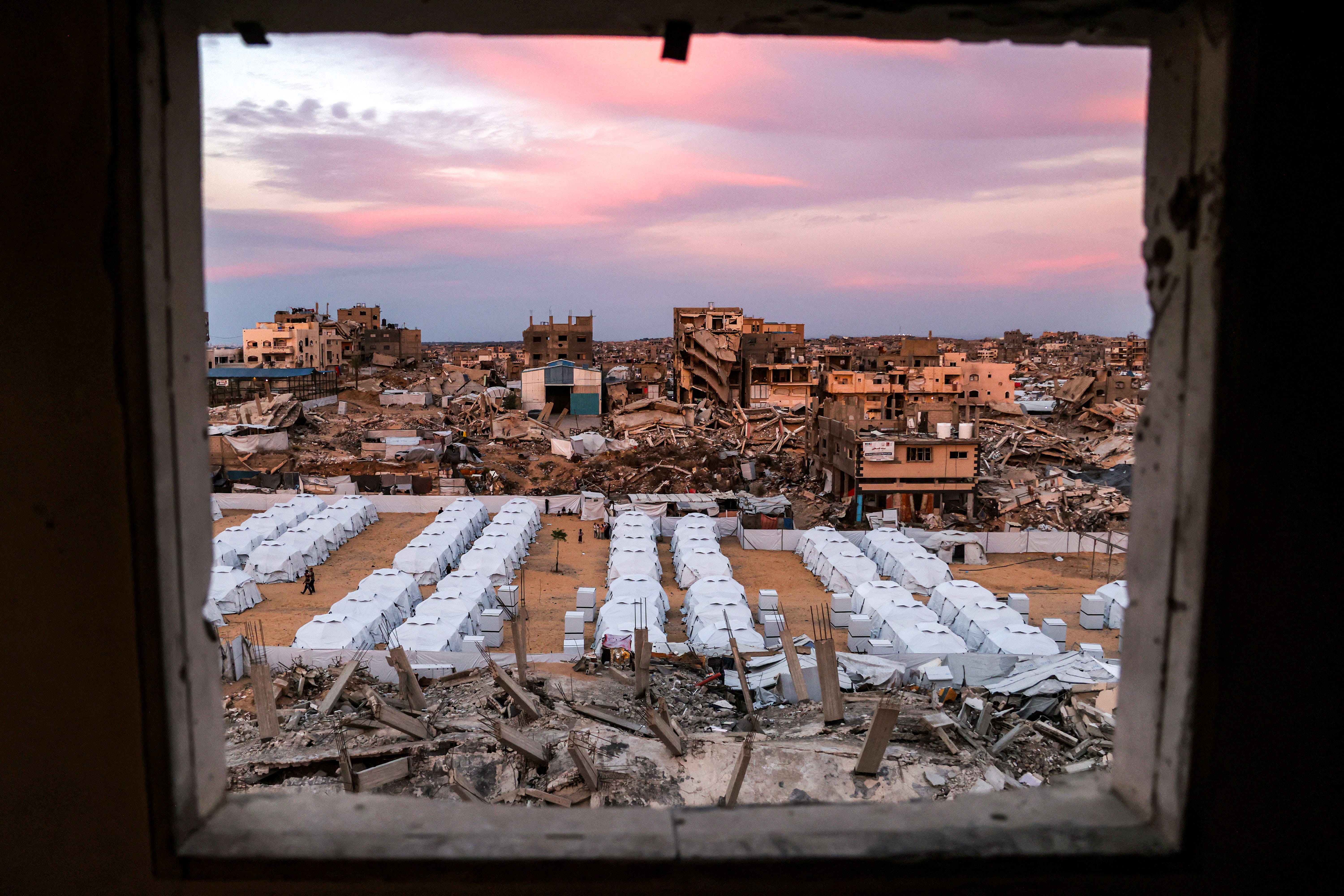
You survived the bombs only to become an archivist of ruins. You walk down streets that exist now only in your head, pointing to an empty square of earth, telling a child who knows only dust, “Here was a bakery. Here was a window where light fell just right.”
You are a living museum of things that no longer have a physical address, carrying an entire geography inside a chest that feels too small to hold it all.
We thought survival meant reaching the other side of the fire with our bodies intact. We did not know that survival is its own quiet verdict.
You look at your hands and wonder why they are still here when everything they ever held has been unmade.
You learn that the hardest thing is not facing the drop of a shell, but bearing the surreal, unforgivable continuity of the world outside. Across a screen, life hums on, arguing over trivialities, while you measure your day by the distance to a plastic water tank or the fading light of a fire burning scrap wood.
Time moved forward for everyone else; for you, it shattered on a certain morning.
You become a creature of the sensory rubble. You know the exact acrid smell of burnt plastic mixed with dust after a strike; you know the bitter taste of salty water, the chill of rain leaking through a torn tent flap, and the heavy, suffocating weight of a silence louder than the explosions ever were.
Stripped of illusions and weary of the world’s cheap empathy, you do not look to the heavens for rescue. You embody a quiet defiance, exhausted.
You don’t step forward because of the legendary courage the headlines write about, but because your stubborn heart simply refuses to stop.
You are a Gazan: tethered to ghosts, stripped of your past, standing in the burning present. You ask for nothing from a world that stood by and watched, except the right to simply exist—to breathe, to remember, and to refuse to disappear.