

Why Tiny Jordan Is a Microcosm for Understanding the Entire Middle East
However accidental its historical genesis, Jordan has become a crucible of knowledge about how power and geopolitics operate in the region.
.jpg)
By Sean Yom
Sean Yom is an associate professor of political science at Temple University. He studies regimes and governance in the Middle East, especially in Arab monarchies like Jordan, Kuwait, and Morocco. His new book, Jordan: Politics in an Accidental Crucible, from which this essay is adapted, was recently published by Oxford University Press. He is also the author of From Resilience to Revolution and a co-editor of The Political Science of the Middle East, with Marc Lynch and Jillian Schwedler.

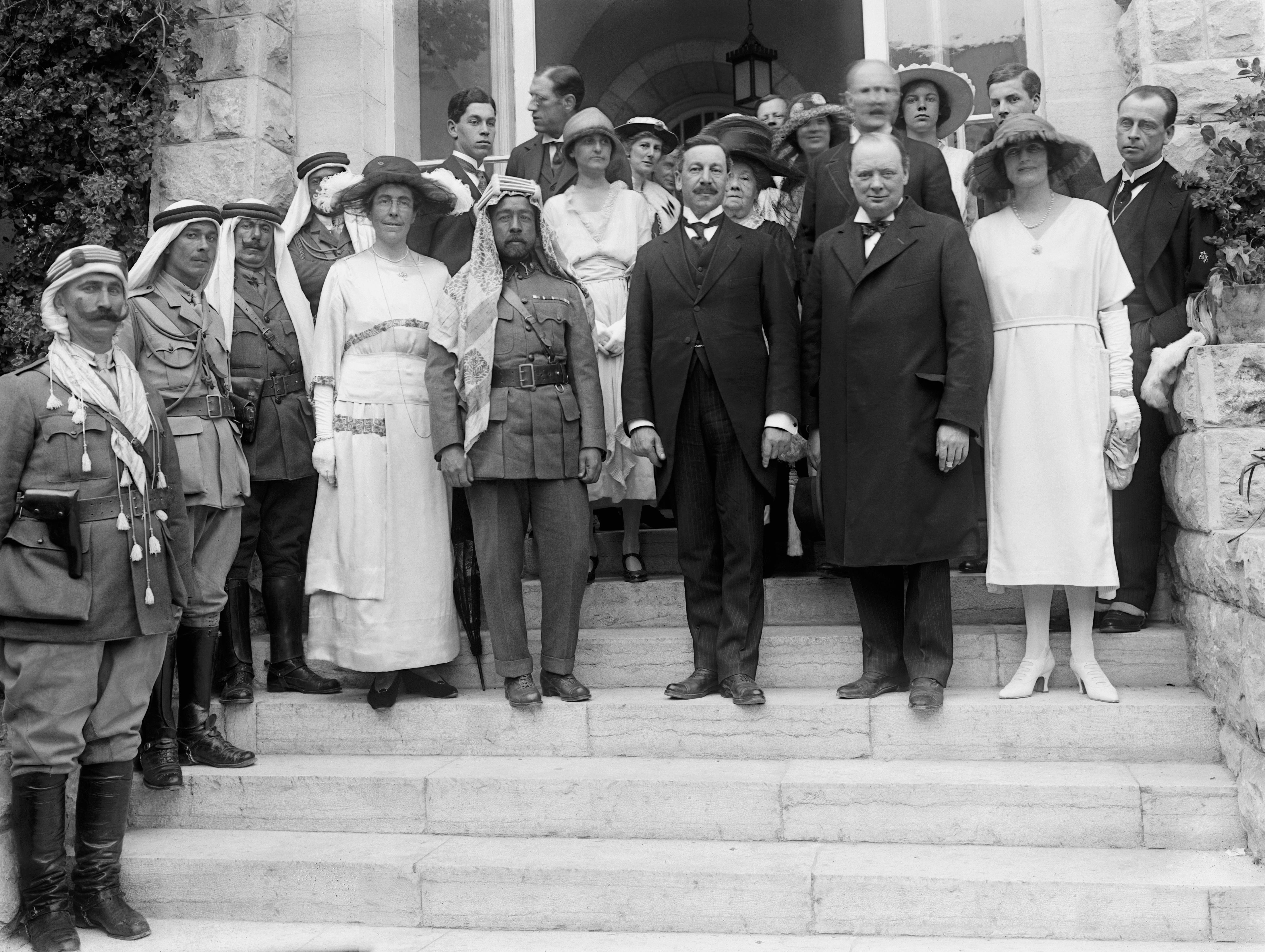
Legend holds that Jordan was conceived by Winston Churchill with the stroke of a pen on a lazy Sunday afternoon in Cairo in 1921. At the height of their imperial power, the British were busily carving up the shattered remnants of the Ottoman Empire. Churchill, then-colonial secretary of the United Kingdom, took it upon himself, after lunch during a stopover in Egypt, to sketch a map of a new Arab country. He did the task, but his drunken, unsteady hand also drew the bizarre zigzag on the Jordanian-Saudi border, now affectionately known as “Winston’s Hiccup.” That was that: Jordan was all the work of a Western imperial baron sipping brandy under the Egyptian sun.
Repeated obsequiously in popular discussions of Middle East politics, this amusing myth encapsulates why Jordan occupies such a peculiar place in the Western imagination—an Arab country that beckons tourists and travelers with fabled lore, yet its true politics and knotty history hidden from view. British officials indeed convened in Cairo during March 1921 to ruminate over their territorial loot from the Great War. But only in Jerusalem weeks later did Churchill engage the future (and first) monarch of Jordan, Abdullah bin Hussein, as part of a frenetic campaign of postwar diplomacy.
Through halting and frustrating discussions, the summitry agreed that Abdullah—son of Britain’s wartime Arab ally, Sharif Hussein of Mecca—would not invade French Syria as he intended and would instead accept a six-month experiment of ruling a rural hinterland on the east bank of the Jordan River. Adjacent to historic Palestine, this was an unmarked area that had never before known statehood. No great cities or famed Islamic centers dotted its dusty terrain. Neither the incoming monarchy nor the many communities already living there, each of which carried their own unique identity and history, had much idea of the other. The future was tinged as much by doubt and fear as ambition and hope.
The Emirate of Transjordan thus flickered into existence through not a Cairene fountain pen, its whimsical destiny foretold by the historical gods, but rather an uneasy bargain forged between hesitant politicians in the heat of Palestine. Nobody could have imagined the political order that would eventually coalesce on these desert steppes. Following World War II, this fledgling state gained formal independence from Britain to become the Hashemite Kingdom of Jordan. Not long after, it would treble in population by absorbing many of the Palestinian refugees from the 1948 Arab-Israeli War. In the succeeding decades, Jordan rapidly modernized, its cities and populace growing as fast as the power of its kingship and military. It gave rise to democratic struggles, authoritarian impulses, and regional aspirations. Its monarchical regime would retrench, reorganize, and rule; its people would tussle, mobilize, and work. Their shared political dramas and economic traumas would shake the country’s fabric but leave behind a remarkable feat: to this day, Jordan is the rare Arab state that has never seen mass revolution, institutional collapse, or regime change, unlike some of its neighbors and much of the Middle East.
However accidental its historical genesis might have been, Jordan has become a crucible of knowledge about how autocratic governance, democratic opposition, economic institutions, and geopolitical intrigue operate in the Middle East and, more broadly, the modern world.
Such basic facts are little appreciated by the outside world, except for a hardy band of academic experts who have devoted their careers studying Jordan. But beyond correcting antiquated parables, why should anyone outside the Middle East care about Jordan today? To be sure, this is a diminutive country. Three dozen cities around the world each have more people than Jordan’s entire population, and its economy is among the smallest in the Middle East. What it lacks in size, though, Jordan makes up in relevance. Wedged between Israel, Syria, Iraq, and Saudi Arabia, and almost touching Lebanon and Egypt at their closest points, Jordan lies proximate to the epic events that continue to sculpt the Middle East and fill Westerners with anxiety—the Israeli-Palestinian conflict, wars in Syria and Iraq, senseless terrorism, revolutionary uprisings like the Arab Spring, the waxing and waning of Islamist ideology, and other headline-grabbing trends. Jordan, by itself, does not create crises. Yet it is always touched by them, and so will always matter whenever global powers like the United States seek to influence, control, and define this region.
For another, peek underneath the Hashemite Kingdom’s docile exterior nowadays, where a seemingly placid public ruled by a proud Muslim dynasty welcomes visitors with open arms. Jordanian politics are not so placid, because how this outwardly stable place coheres together raises tantalizing puzzles that should interest all aficionados of modern politics and international affairs. How does an authoritarian monarchy that never needs to win elections exercise its power and claim popular legitimacy? When does a population obey, or resist, a government that demands obedience behind phalanxes of soldiers and police? How do courageous democratic movements representing workers, women, youths, and other marginalized voices protest for greater rights? Why does an economy infused by massive foreign aid and guided by enterprising capitalist reforms always flounder? How does a weak country with indefensible borders interact with bigger neighbors, hostile rivals, regional conflicts, and a daunting world?
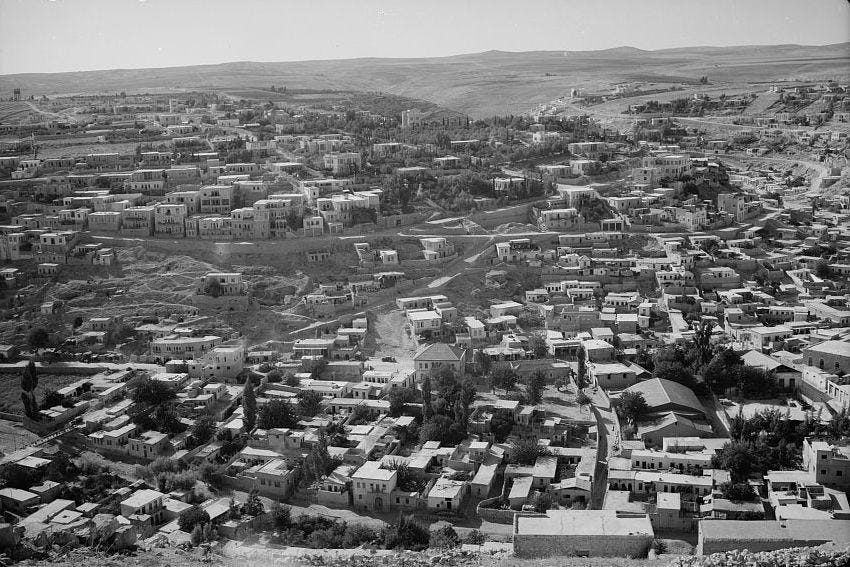

The answers to these questions are complicated. This is for good reason: in the Middle East, the only thing worse than simple questions are simple answers, because just a little bit of knowledge can be a dangerous thing. Jordan gives complex, but provocative, answers to these timeless questions. Indeed, it has a fractal-like quality. The more one peers into its state and society, the more elaborate and mesmerizing the picture becomes. Hence the title of my new book: however accidental its historical genesis might have been, Jordan has become a crucible of knowledge about how autocratic governance, democratic opposition, economic institutions, and geopolitical intrigue operate in the Middle East and, more broadly, the modern world.
Jordan cannot be reduced to the banalities of orientalist folklore, much less the other tropes that have long garbled how the Western media describe the kingdom: a resilient state survivor that should be happy it merely exists, an oasis of moderation and stability in a sea of Middle East extremism, or the last redoubt of a fabled Islamic kingship. Only by thoughtfully peeling back these layers, with patience and open eyes, can we appreciate what politics truly entails in this fascinating corner of the world.