
'The World Will Know the True Face of MBS.' One Migrant Worker’s Fight for Justice in Saudi Arabia
How the 'new' Saudi Arabia still runs on 'modern-day slavery.'

Ahmed Abdul Majeed arrived in Saudi Arabia in 1981, a young Indian man joining the ranks of millions of migrant workers who, for all the kingdom’s vast oil wealth, are the other engine of the Saudi economy. He became a senior sales executive in Riyadh for the kingdom’s largest travel agency, Al Tayyar Travel—a busy job serving a demanding, elite clientele that included members of the Saudi royal family, diplomats and wealthy businessmen, some of whom he worked with for decades.
Forty years later, in his early 60s, Abdul Majeed tried to leave Saudi Arabia after he was abruptly fired at the start of the COVID-19 pandemic, as his wife back in India was gravely ill. But like millions of other foreign and migrant workers in Saudi Arabia, he was at the mercy of the kafala—meaning “sponsorship”—system, which gives Saudi employers near-complete control over their workers’ legal status, including whether they can leave their job or even leave the kingdom. More than 80 percent of the private-sector workforce in Saudi Arabia is filled by migrant workers, from construction and other manual labor to service jobs and clerical work. The more than 13 million migrant workers in Saudi Arabia, many from South Asia, account for 42 percent of the kingdom’s population. Working under the kafala system has been likened to “modern-day slavery,” since it binds workers’ rights and livelihoods to the whims of their employers.
The Saudi government has touted labor reforms in recent years, including supposed changes to the kafala system in 2021 that aimed to curb its restrictions on foreign workers changing jobs and leaving the kingdom. But in practice, little has changed, and “widespread abuses that originate from the kafala system” remain rampant, according to Human Rights Watch.
For much of his time in Saudi Arabia, the company Abdul Majeed worked for was owned by Nasser al-Tayyar, a prominent Saudi businessman who was among those detained in the infamous shakedown by Crown Prince Mohammed bin Salman in 2017, which the Saudi government cast as an anti-corruption drive. Like other wealthy detainees, Tayyar was only released from the gilded prison of the Ritz-Carlton in Riyadh after reaching a settlement with MBS, as the crown prince is widely known. In his case, Tayyar relinquished control of Al Tayyar Travel, which was rebranded as Seera Group and then essentially acquired by Saudi Arabia’s almost trillion-dollar sovereign wealth fund—the Public Investment Fund, or PIF—which MBS controls.
Abdul Majeed’s abuse shows how even migrants in clerical or office jobs can still be abused under the kafala system. His ordeal is just one example of labor exploitation in a kingdom built on it, undermining the reformist, business-friendly image of Saudi Arabia that MBS has cultivated through an army of well-paid consultants and image advisers.
After Abdul Majeed was abruptly fired in early 2020, what had been a mostly comfortable life as a white-collar foreign worker in Saudi Arabia turned into a nightmare because of the kafala system. Seera Group confiscated his passport and forced him to work without pay for six months to recover unpaid client fees—the company’s dues, not his. Eventually, he was forced to pay the debts himself, some $100,000 in all, which he could only do after selling his house and other assets back in India. Although he was finally able to leave Saudi Arabia later that year, he had to buy his own ticket home, “even though a flight back was part of my employment contract,” as Abdul Majeed told me.
“Imagine a man serving 40 years, generating millions of profit for the company,” Abdul Majeed said, the anguish rising in his voice. “I lost everything. I had nothing to do with the collection. I was the area manager for the company.” He said he sold his home in India for a 30 percent to 40 percent loss. “If I hadn’t, I would have been behind bars for life.”
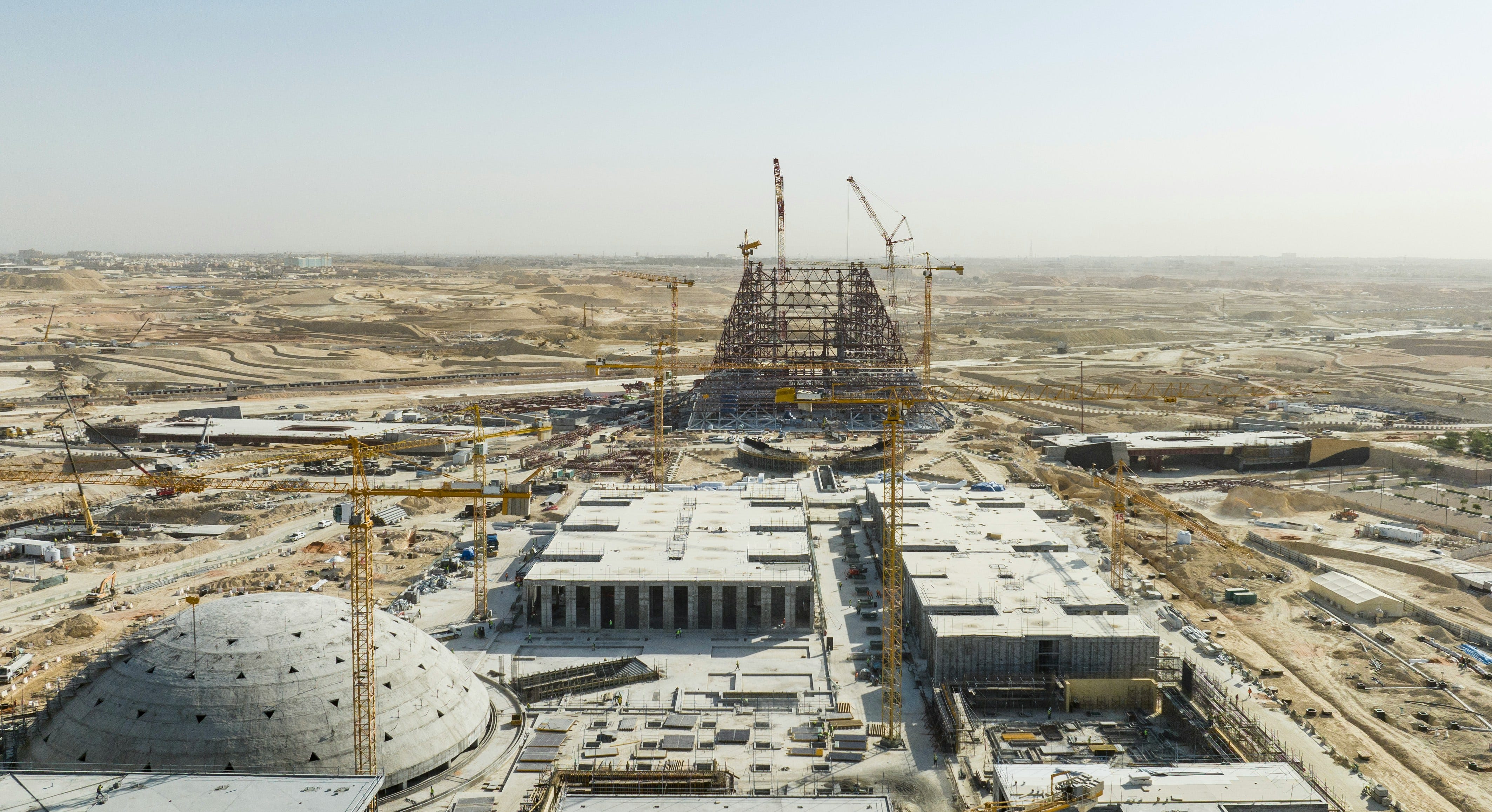
In fact, Abdul Majeed is relatively fortunate. Most foreign or migrant workers in Saudi Arabia don’t have any assets in their home country they can sell to release themselves from this kind of labor abuse and exploitation. This is especially true for laborers and construction workers who keep the vital oil industry running, and who are now driving a frenetic construction boom for all the costly megaprojects launched by MBS. Instead, if their work is terminated for whatever reason, migrant workers may languish in overcrowded detention centers before eventually being deported. In the worst cases, many have died in brutal working conditions, including extreme heat—their deaths often uninvestigated by Saudi authorities, their employers not held to account and their families denied any compensation.
“If I hadn’t had that property back in India to sell, I could still be in a Saudi prison today,” Abdul Majeed said. “I might have died.”
For Abdul Majeed, his four decades of office work in Saudi Arabia culminated in six months of “entrapment and forced labor,” according to the Human Rights Foundation, which detailed Abdul Majeed’s case in a report on human trafficking in the kingdom enabled by the kafala system.
Read the rest in World Politics Review. Gift link: https://www.worldpoliticsreview.com/saudi-arabia-kafala-human-trafficking/?share-code=EMCH5UyW4BtP


