

By Thanassis Cambanis and Zaha Hassan
Thanassis Cambanis is an author, journalist, and vice president for research at the Center for International Policy.
Zaha Hassan is a human rights lawyer and a senior fellow at the Carnegie Endowment for International Peace.
It is no secret that the United States has a Middle East problem. For decades, U.S. leaders have made deals with dictators in the mistaken belief that friendly authoritarian regimes could ensure American regional interests. Stability mattered to the United States to enable the uninterrupted flow of oil and other petrochemicals from the region. Well-armed autocrats, U.S. policymakers believed, provided the best guarantee.
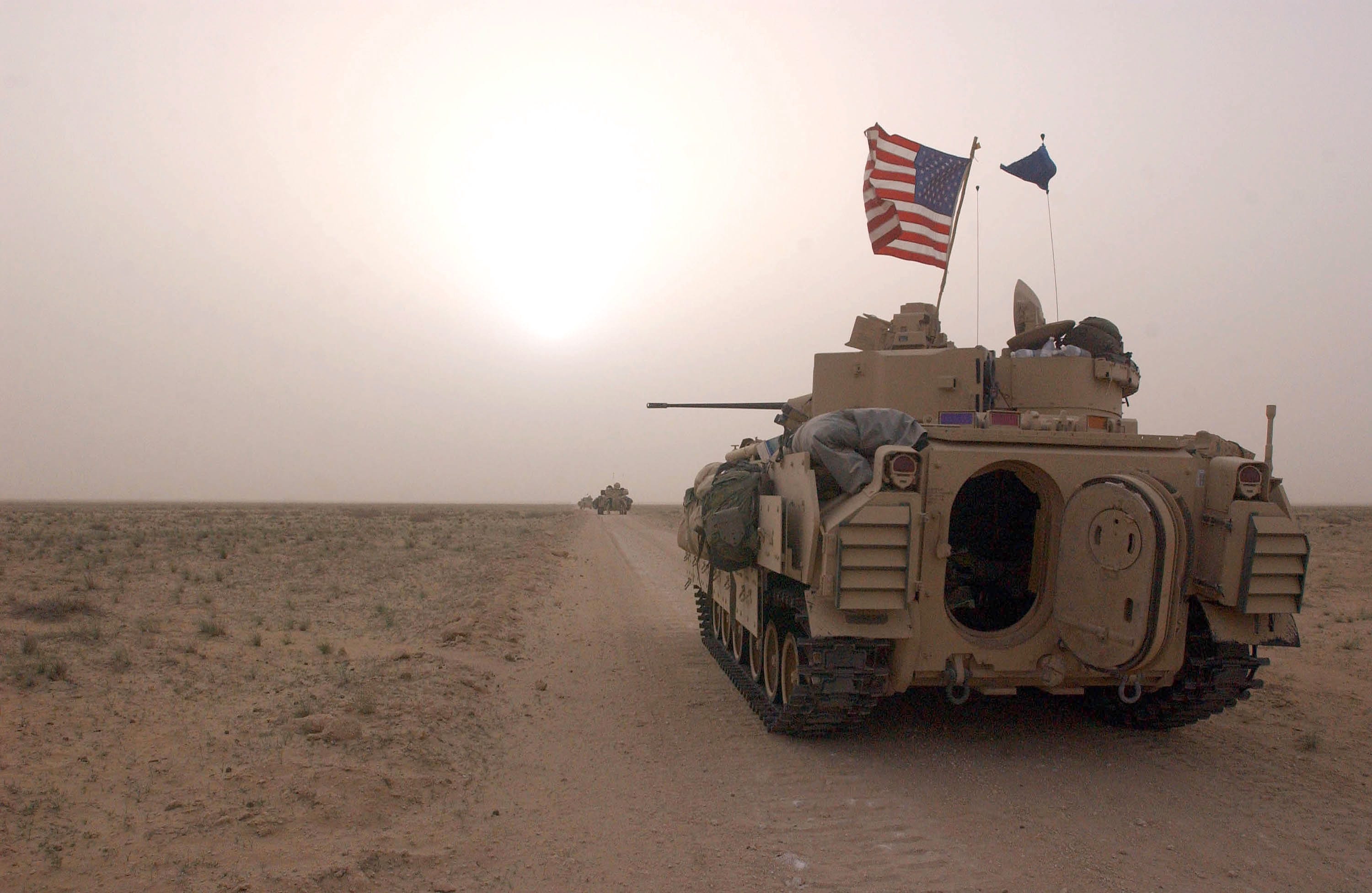
In fact, the opposite is true. Under these misguided assumptions, Washington has become one of the main drivers of regional conflict, from the U.S. invasion of Iraq in 2003 to the joint U.S.-Israeli war on Iran in 2026. This has been catastrophic for millions across the Middle East and North Africa, with toxic blowback for the United States as well.
True safety and stability require respect for rights, good governance, and freedom from fear and violence. For too long, U.S. leaders have deemed otherwise for the Middle East, settling instead for short-term authoritarian bargains. Local autocrats win U.S. military backing in exchange for limited asks that only deepen instability: weapons deals, new bases, oil-market cooperation, support for Israel, or assistance in another military campaign or political crackdown.
The U.S. relationship with Israel represents the most pernicious example of that logic. For decades, the U.S. government has professed support for a two-state solution while helping Israel make a Palestinian state impossible. Along the way Washington has been complicit in Israeli war crimes and joined in reckless wars that have made the Middle East the world’s most dangerous and unstable region. Today, Washington’s special relationship with Israel is best understood as an alliance with an expansionist, authoritarian state that falsely bills itself as the “only democracy in the Middle East” while making common cause with the United States to violently extend illiberal, ethnonationalist policies to millions of Arab subjects and neighbors.
There is a better way. U.S. policy in the Middle East has been so bad for so long that a new U.S. administration has ample room to repair harm and promote the common good. The starting point: There is no stability without justice and accountable governance.
Washington has become one of the main drivers of regional conflict, from the U.S. invasion of Iraq to the joint U.S.-Israeli war on Iran.
The United States cannot, and need not, be in the business of dictating terms to or fixing Middle Eastern governments; nor should we abruptly disengage from the region. We cannot impose global order or energy security by bombing foreign nations. Military force does not solve political problems. The 2026 U.S.-Israeli war on Iran is a case in point. Donald Trump’s wars with Tehran in 2025 and 2026 illustrate the limits of force along with the need for diplomacy. The United States should not ignore Iran’s nuclear program and support for hybrid and proxy militias in other countries, but a war without even consultation with those in the region who would be most affected was not the answer. Trump realized every American war hawk’s dreams by joining Israel to attack Iran, but the U.S. bombings in June 2025 emboldened the Iranian government while failing to end its nuclear program. The catastrophic U.S.-Israeli war launched in February 2026 produced a far more radical, centralized and militarized Iranian leadership, which immediately, and predictably, exercised its own leverage in response to the American resort to force. Iran now determines whether roughly one-fourth of the world’s energy supplies can reach markets through the Strait of Hormuz. Brute force produced not clarity and security, but instead introduced chaotic uncertainty to world markets, and strengthened the most radical strains in the Iranian state. Only sustained diplomacy, peacemaking, and political compromise can reverse the harm.
The question is how we engage. The United States can stop providing aid and cover to Arab regimes that abuse their citizens, and enabling an Israeli government addicted to repression and war. We should use the full range of our policy tools—military assistance, political support, and economic investment—to promote regional peace and economic integration conditioned on respect for internationally recognized borders.
A U.S. policy that promotes peace and justice in the Middle East will end the United States’s direct complicity in rights violations and reduce the torrent of armed conflict and abuse of power. Economic and political engagement must replace our habitual reflex to address every concern with military force. Over time, this will encourage peace and good governance in a region craving stability to meet development challenges and take advantage of its natural resources and human capital.
We can begin a new era of U.S. foreign policy starting in the Middle East—the same region where the United States forged a decades-long record of war and lawlessness that diminished and destabilized both. To begin recalibrating its policy, the United States will have to conclusively end its war with Iran and the related regional conflicts that have flared since October 2023; responsibly wind down forever wars; promote a just peace between Palestinians and Israelis; end support for the military campaigns and occupations conducted by U.S. allies; and finally, ensure that U.S. military aid complies with federal statutes and international law. This approach stands the best chance of creating the conditions for sustainable development, safety, and prosperity for all.
The United States should dramatically reduce its military footprint in the Middle East and discourage unreliable partners and allies from starting wars they believe the United States will finish for them. Instead, the United States should implement a less militarized, more consistent arms-length approach to the region. These broad principles translate into Middle East policies that draw the United States out of conflicts—including conflicts that are likely to continue even without a U.S. role— while keeping the United States invested in diplomacy.
The United States cannot create a demilitarized Middle East, but it can leverage American influence in support of a nuclear-free region and encourage a regional security architecture that enables diplomacy and conflict resolution. Middle Eastern states won’t accept the lop- sided status quo, in which a nuclear-armed Israel supercharged with a U.S.-backed qualitative military edge inflicts perpetual wars on its neighbors. Iran’s commitment to its nuclear program stems in part from this structural imbalance. Either the United States pushes for a truly nuclear-free Middle East, or else it accepts that regional powers (and not just Iran) will seek the deterrent power that only weapons of mass destruction can provide. The United States must finally recalibrate security assistance to the region to ensure that it comports with federal laws that prohibit weapons transfers to states that consistently violate human rights or who use those weapons for non-defensive purposes. The United States should begin to wean itself from blockbuster weapons deals and long-term security agreements that create domestic dependencies and bind the United States from being able to withhold transfers when such action is required. In place of permissive weapons transfers, Washington should use diplomacy and regional alliance net- works to provide assurances to Arab states in the Gulf who have spent considerable money on U.S. defense contracts and have legitimate security concerns. Washington’s industrial policy should protect the defense industry’s high-quality jobs by redirecting them to other manufacturing needs, including green energy.
The U.S. military must substantially lighten its footprint in the Central Command areas of operations, covering most Middle East hotspots. Sprawling bases that have effectively become permanent should be replaced with bilateral agreements that allow the United States to deploy forces to national facilities during emergencies. Maintaining tens of thousands of troops in Iraq, Qatar, the United Arab Emirates, and Bahrain, along with bombers and naval craft, is no longer sustainable, particularly given affordability concerns domestically. (The precipitous U.S. withdrawal from Northeast Syria underscores the problems with an overextended U.S. military footprint.) Nor should Israel continue to enjoy a blank check when it comes to its reliance on the United States for military support, especially when this involves violating federal and international law and ignoring U.S. advice. This posture only creates expectations among other U.S. allies who will want the United States to back them up and bail them out when they resort to war that goes beyond their control.
The United States should dramatically reduce its military footprint in the Middle East and discourage unreliable partners and allies from starting wars they believe America will finish for them.
If the United States gets out of the forever war business in the Middle East, it will remove one of the most potent catalysts for regional conflict. To be sure, a U.S. shift from war to diplomacy will trigger a regional repositioning, which might involve short-term disorder. Some conflicts might temporarily flare up as regional powers and foreign actors seek to capitalize on an American retreat. But step back and it becomes clear that U.S. arms sales, along with the moral hazard created by our long-term deployments, is a key driver of many conflicts in the region. We’ve already tested to destruction the theory that more U.S. military action can calm the Middle East. It is time to implement policies and use tools that have not been tried before. While a diplomacy-forward U.S. approach may not end all Middle East wars; at the very least, the United States will not be leading the charge to start new ones.
A progressive U.S. policy toward the Middle East will, at minimum, remove myriad friction points that have entangled every administration since 9/11. It will also end U.S. complicity in human rights abuses and war crimes perpetrated by our regional allies and partners. More expansively, a renewed commitment to soft power, multilateralism, and the rule of law has a better chance of supporting stabilization in the Middle East and encouraging deeper regional cooperation. Middle Eastern governments have the resources and know-how to reduce armed conflict, share the region’s limited water resources, and respond to the climate crisis, if they are free from an incentive structure and U.S. policies that have fueled war.
Blowback from forever wars abroad eroded constitutional freedoms and due process in the United States. Warmongering abroad and support for Israel’s occupation of Palestine have produced widespread domestic opposition that has resulted in public and private actions to restrict American civil liberties, suppress the right to protest on college campuses, censor speech on and offline, and precipitated attacks on academic freedom. It has also created space for political violence domestically. Prioritizing diplomacy instead of war in the Middle East would help to begin a process to repair some of the many self-inflicted harms on U.S. democracy since 9/11.
The Middle East has consumed a disproportionate amount of policy attention over the last quarter century, while its residents have suffered under the bad policy choices of the region’s undemocratic governments, and, crucially, because of the role of the United States. Once the United States embraces the rule of law and multilateralism, and invests in soft power rather than forever war, the Middle East will enjoy a virtuous boost: an immediate reduction in high-intensity conflict, and an opportunity for long-term stabilization and peacebuilding. Absent a radical change of direction in the Middle East, the United States will continue to be dragged into crises abroad that destroy communities, harm Americans, and make the region and the world less safe.
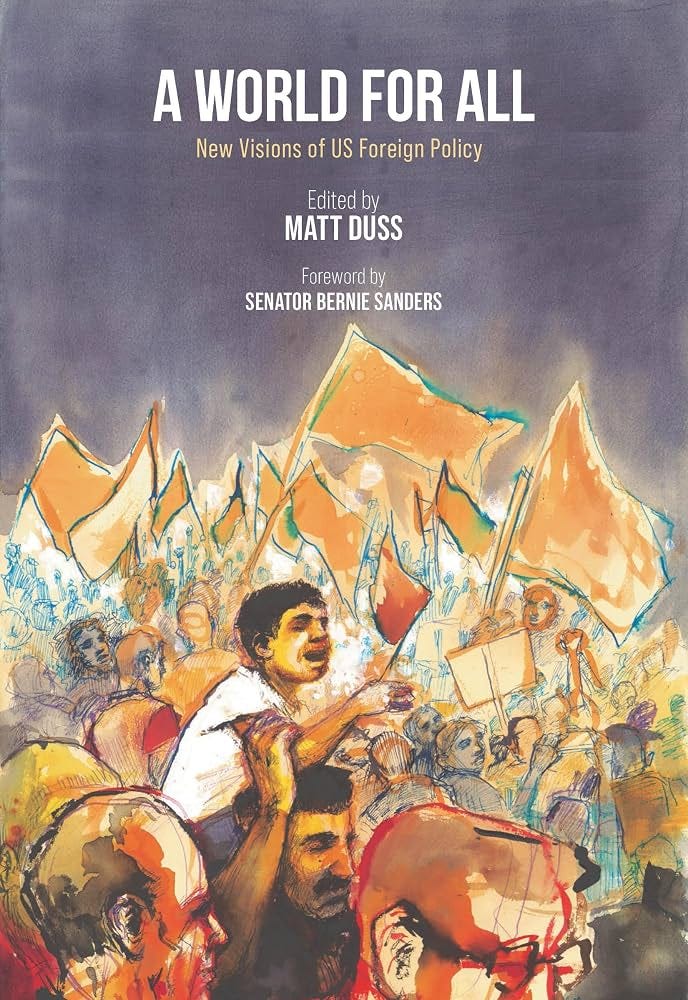
Excerpted from A World For All: New Visions of U.S. Foreign Policy edited by Matthew Duss, published by The Nation and OR Books.