

Looking to Space for a Glimmer of Hope and Solidarity
Amid a regional war with planet-wide consequences, the Artemis II mission managed to capture a fleeting global moment infused with rare optimism.
By Hagai El-Ad
Hagai El-Ad is an Israeli human rights activist and the former executive director of the human rights organization B’Tselem. He lives in Jerusalem.
The center of gravity of the recently released film, “Project Hail Mary,” is the scene where European bureaucrat Eva Stratt (played by Sandra Hüller) sings a melancholy, breathtaking karaoke rendition of “Sign of the Times”: “Just stop your crying, it’s a sign of the times / Welcome to the final show / I hope you’re wearing your best clothes / You can’t bribe the door on your way to the sky / You look pretty good down here / But you ain’t really good.”
And truly, it ain’t really good. It’s truly an end-of-the-world atmosphere. The sign of the times, and you can’t always stop your crying because you feel like everything is going to hell between the never-ending wars, AI algorithms manipulating our lives, local and global politics gone off the rails, and the global warming frying our brains.
Maybe the only certainty we really have waiting for us is unbearable heat waves that will only get longer and hotter. A single planet—the only one we have—that’s cooking itself into oblivion.
The first launch I ever got to see was not for peaceful purposes; it was part of a war.
Amid this reality, “Project Hail Mary” is a supernova of global optimism. It’s optimism we need like air to breathe, and it moves us to tears. Because more than a scientific (well, sci-fi) utopia, the film is a political utopia: In the face of a global environmental calamity, humanity opts to come together, employ the best of our scientific abilities and jointly chart a future of hope, reason and human solidarity—exactly the opposite of the reality we live in, where, when faced with a real climate catastrophe, humanity rejects science, led by narcissistic, violent figures who are the opposite of that superstar European bureaucrat.
As a Star Trek nerd, all my life I’ve imagined a day when I would get to see a rocket launch into space. A little less than a year ago, it happened. On the Israel Trail, in the middle of the desert. Suddenly, thunder shook the air. It leapt out of nowhere, scorching the sky as it ascended at midday, mesmerizing the observer. My dream come true? Not quite. It was an Arrow 3 interceptor—technically a rocket launched beyond the atmosphere, into space, but not what I had hoped.
At its core, whether it’s ballistic missiles, exoatmospheric interceptors, or rockets that launch satellites—or astronauts—into space, the technology is the same. But it’s a world away. I thought about what had just happened, and how it couldn’t be undone: The first launch I ever got to see was not for peaceful purposes; it was part of a war. I wanted to sing some melancholy karaoke.

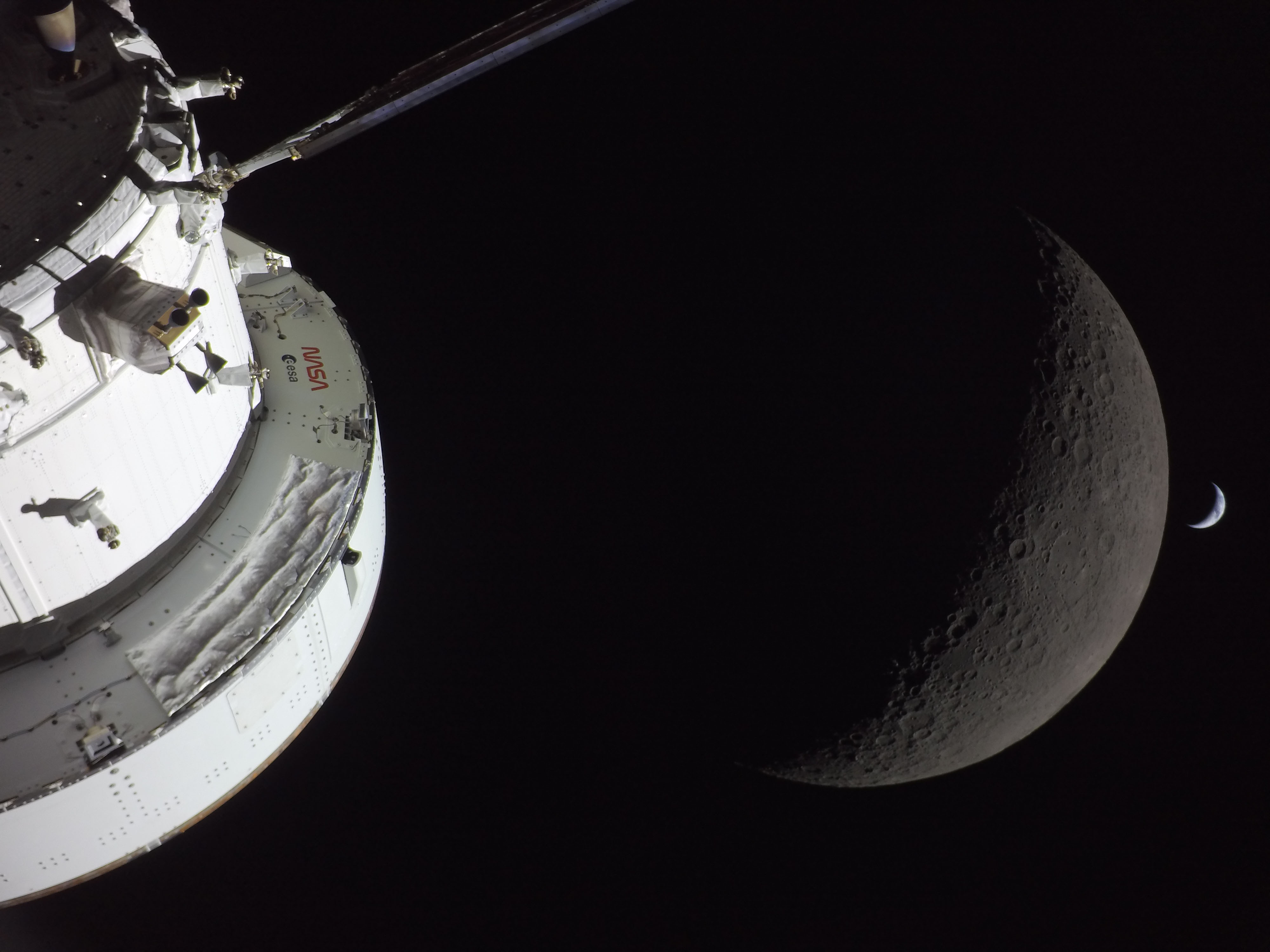
The second Iran war shuttered cinemas for several weeks. As a result, the release of “Project Hail Mary” was delayed, so when it finally came out in theaters, it coincided with the real journey of NASA’s Artemis II mission around the moon. These two cosmic events—one science, one science fiction—became intertwined: The Artemis astronauts were given a private screening of “Project Hail Mary” before blasting into space. NASA Mission Control Center responded to astronaut Reid Wiseman, 400,928 kilometers away from Earth with the most iconic expression from “Project Hail Mary”: “Amaze, amaze, amaze.”
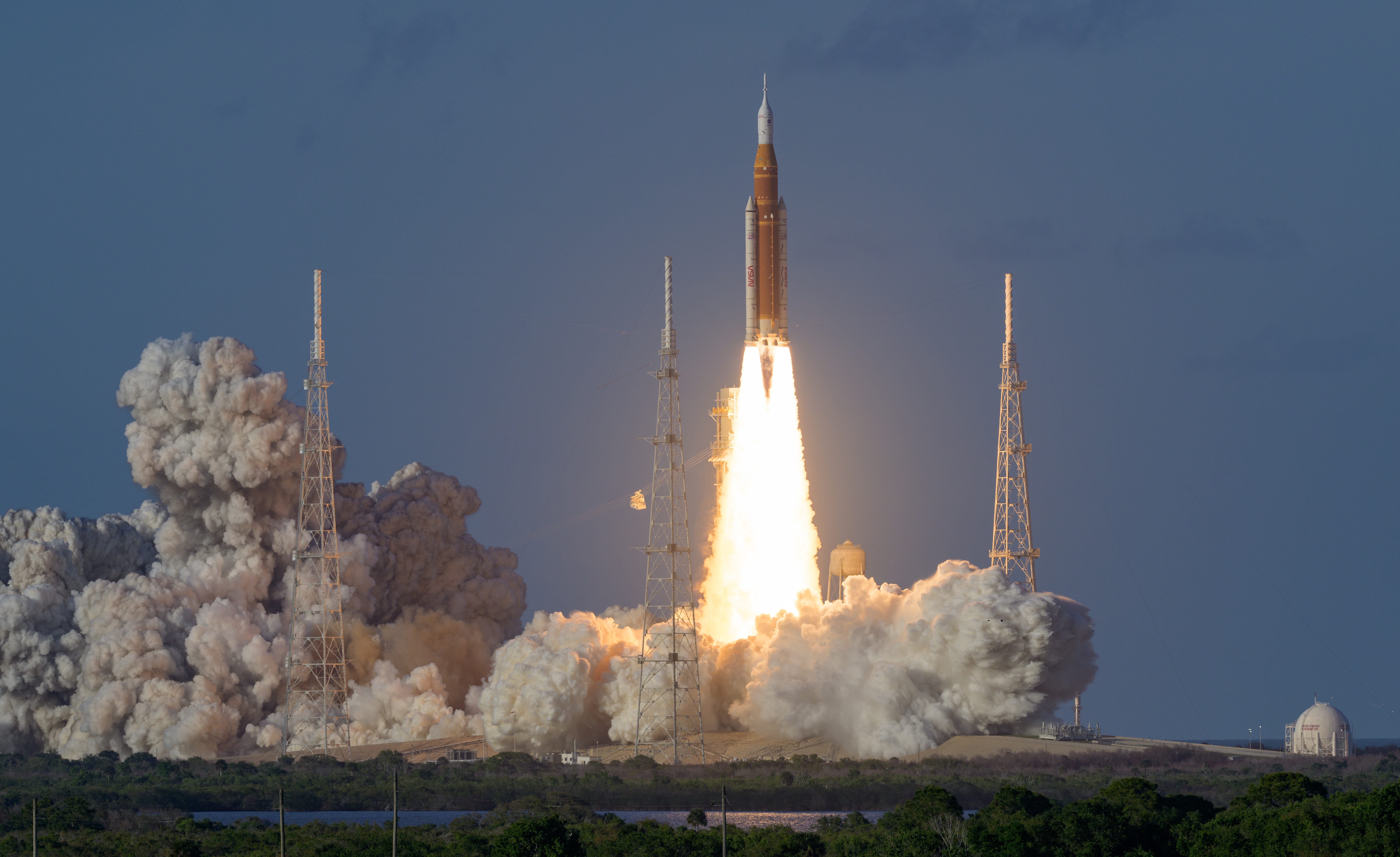
Even amid a regional war with planet-wide consequences, the Artemis launch managed to capture a certain global moment infused with a glimmer of optimism. Not quite like 58 years ago, with Apollo 8 going around the moon on Christmas Eve in 1968, but still.
There is space for optimism—for science, inspiring journeys, grand visions, and people who, contrary to the sign of these times, are characterized by altruism, modesty, and decency.
Also totally real is Artemis II as a utopia of sorts: American and Canadian astronauts, including the first woman and the first person of color to go beyond Low Earth Orbit, powered by the European Service Module on its way to the moon and back, courtesy of the European Space Agency.
Observe the surprising muscle of international technological cooperation for peaceful purposes. Even the nightmare that is Donald Trump had to swallow a most public cooperation with Canada and Europe, both of which he despises, and honor a team of astronauts who were, mercifully, not all white men. When one considers these aspects, you can’t help but smile and think of how Artemis II is the fulfillment of some of Trump’s worst nightmares—and how it was a resounding success.
There are human endeavors that started before Trump and will continue after him and his ilk. Endeavors bigger than small men, more significant than small-minded racism, lasting beyond the doomed efforts to suppress reality. There is space for optimism—for science, inspiring journeys, grand visions, and people who, contrary to the sign of these times, are characterized by altruism, modesty, and decency. Sometimes what it takes is combining a real trip to the moon with a sci-fi utopia and, above all, remembering Eva Stratt, seconds before she returns to orbit, singing that “everything will be all right.”
Editor’s note: A version of this article was originally published in Haaretz.