

Alhakam Shaar
Alhakam Shaar is a non-resident fellow at the Tahrir Institute for Middle East Policy focusing on participatory urban reconstruction in Syria. An interdisciplinary conflict researcher and social anthropologist from Aleppo, he is a co-founding member of Liqa al-Umran (The Urbanism Gathering), a platform for connection and dialogue on reconstruction in Syria. He holds graduate degrees in teaching English from the University of Aleppo and sociology and social anthropology from the Central European University.
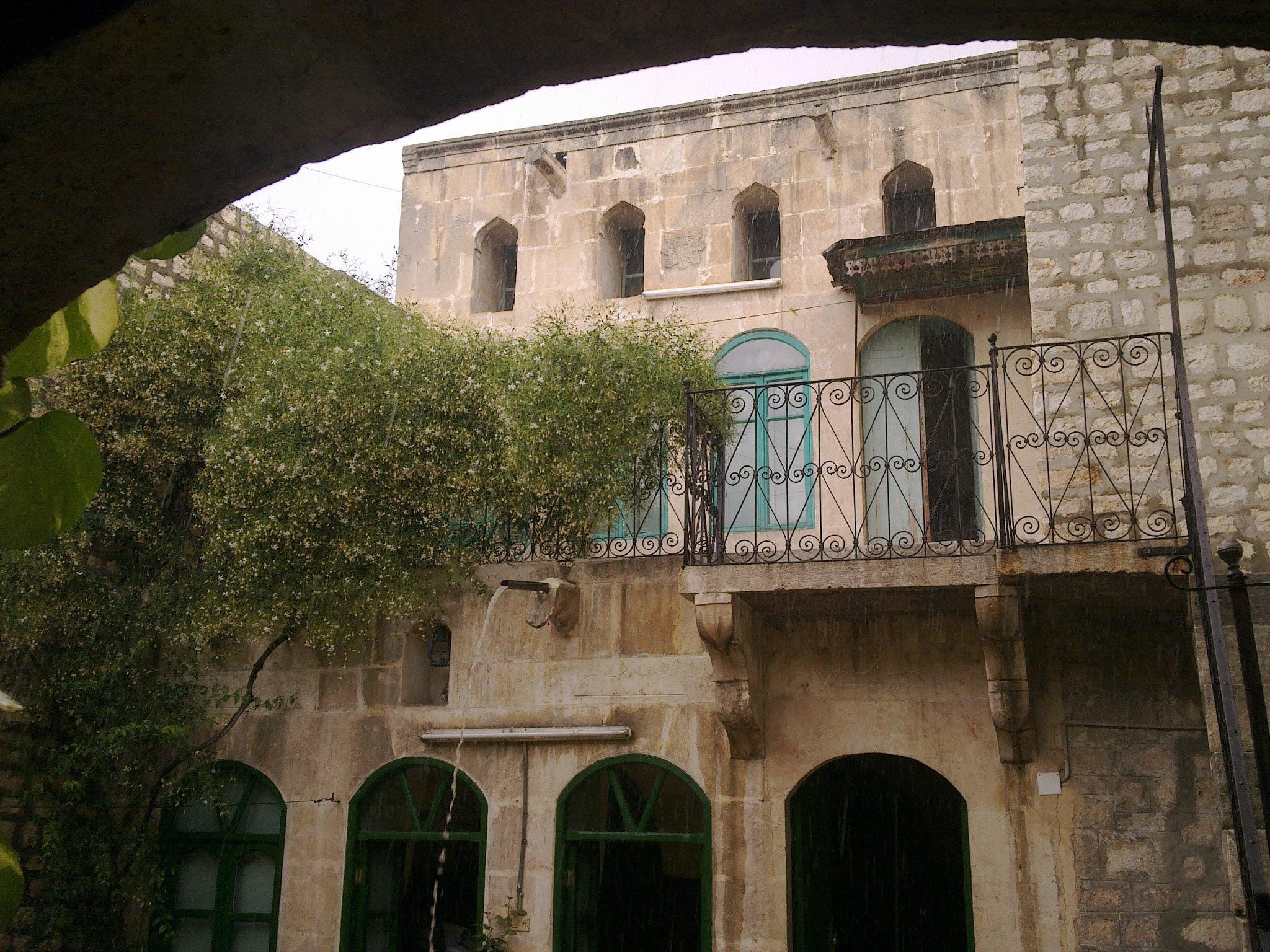
In the 1990s, around the time I was 8 years old, my late father sold our apartment in western Aleppo, a spacious ground floor flat with two gardens in the neighborhood of al-Hamadaniyeh, and bought for its price two dilapidated and certainly underappreciated historic houses in Aleppo’s Old City. One was in Qadi Askar, on the eastern edge of the Old City. A stone house perhaps dating back to the Ottoman era, it would become our new family home. As my father once described the house, “It was beautiful but in poor shape, having last been renovated in 1898.”
The other house was further west in al-Hazzazeh, which would serve as an office for my father where he could support his meager government salary with computer and programming courses.
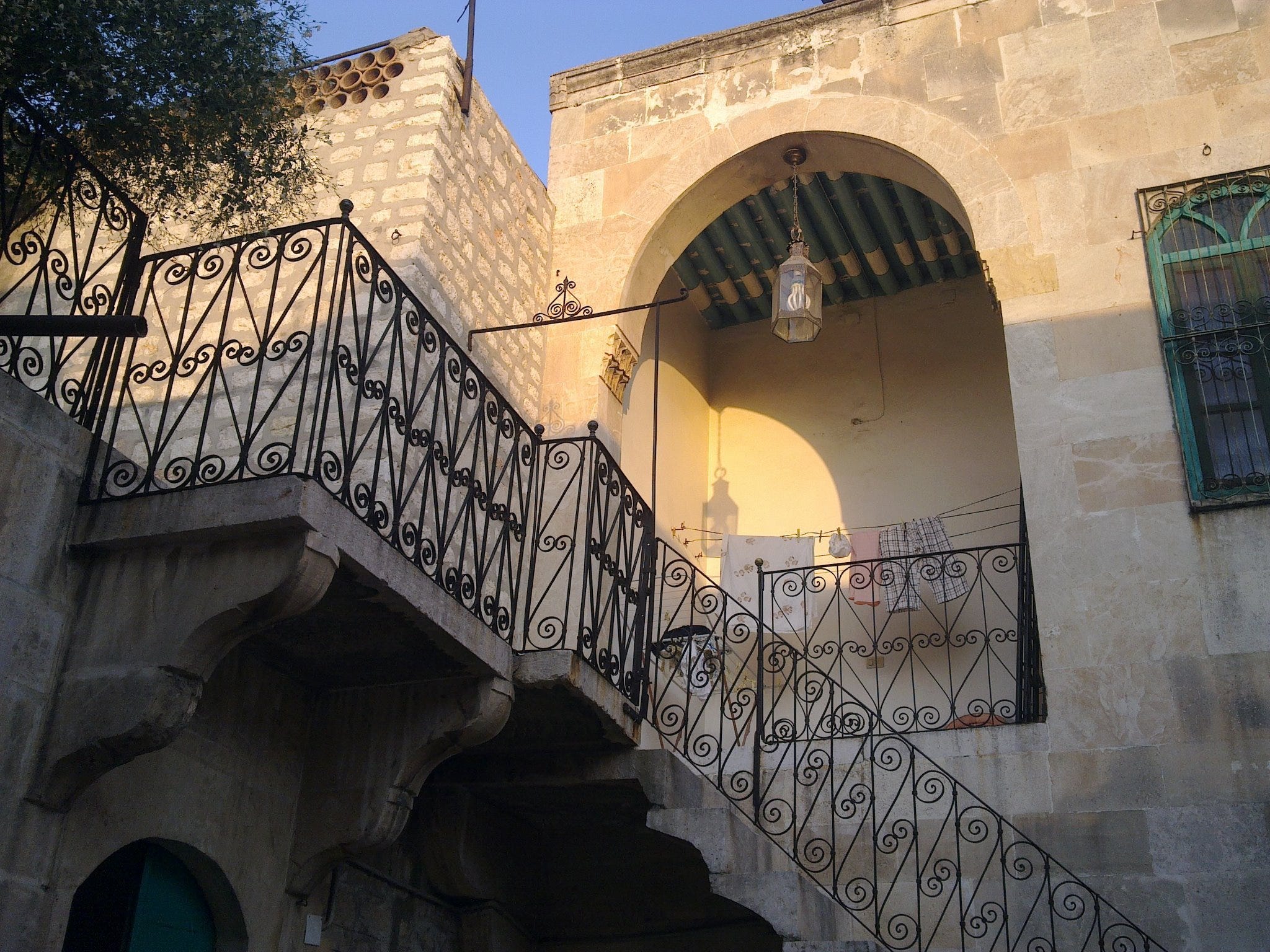
He had his reasons for moving. My father was born in his maternal grandfather’s house in Haret al-Bustan in the Old City, a stone building set around a courtyard that Syrians know as a beit araby (“Arabic house”). He had also been an active member, and later board member, of Jam’iyet al-Adeyat, a cultural heritage association established in 1924 in Aleppo. A return to the Old City, the heart of Aleppo that had been designated in its entirety as a UNESCO World Heritage site in 1986, was thus particularly meaningful for him.
For me, this move would mark the beginning of my deep connection with Aleppo’s old streets and courtyard houses—a connection that remains important to me so many years later, even today after so much destruction and loss.
As much as a kid and later teenager could, I began to take part in renovation work for the two homes. I would be sent to the nearby Karaz Dada Cemetery where I could buy cement and gravel from the gravedigger’s corner. I would mix mortar, chisel the bathroom floor for the drain sieve to fit in, paint windows and ceilings, stay with builders, and otherwise assist my father when he wanted to carry out repair works himself—well, ourselves really—as a way of both cutting costs and experimenting. Together, we would learn the craft and enjoy the process of rebuilding and building our very own old Aleppian homes. My own learning and joy came as a welcome side effect. At times, I would even be rewarded with five lira—the equivalent of 10 cents.
Between 2012 and 2016, Aleppo’s Old City came under fire—mostly due to the Assad regime’s barrel bombs, but also the occasional rebels’ mortar shells. Only two days before the regime captured Qadi Askar in December 2016, my fleeing neighbor shared the sad news that a regime bomb had ripped through our house. Though it only destroyed a part, it also made our home vulnerable to looters and the elements. Across my years of exile away from “Assad’s Syria,” our home in Qadi Askar slowly withered away, until the 2023 earthquake dealt a serious blow to its still standing rooms.
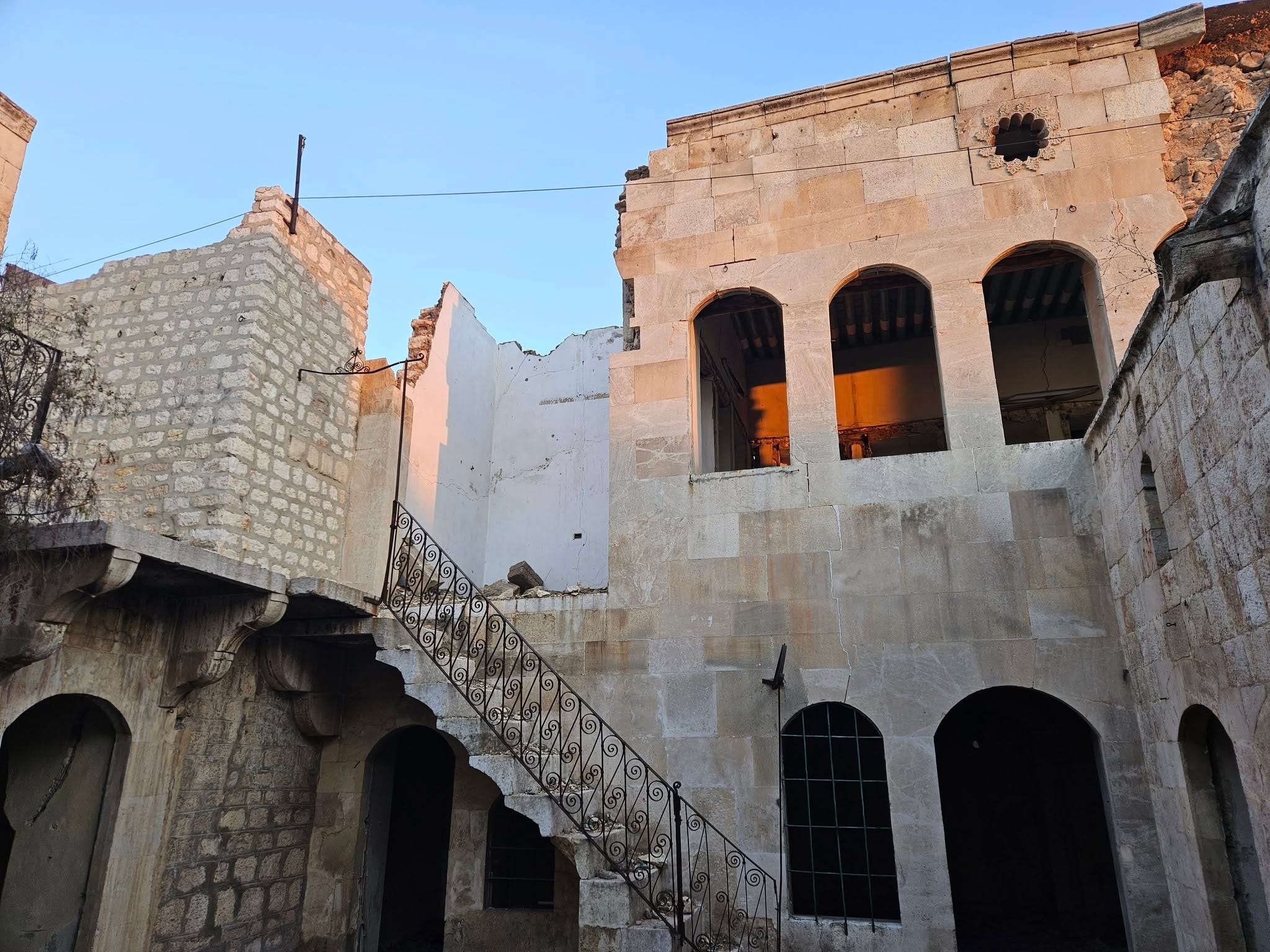
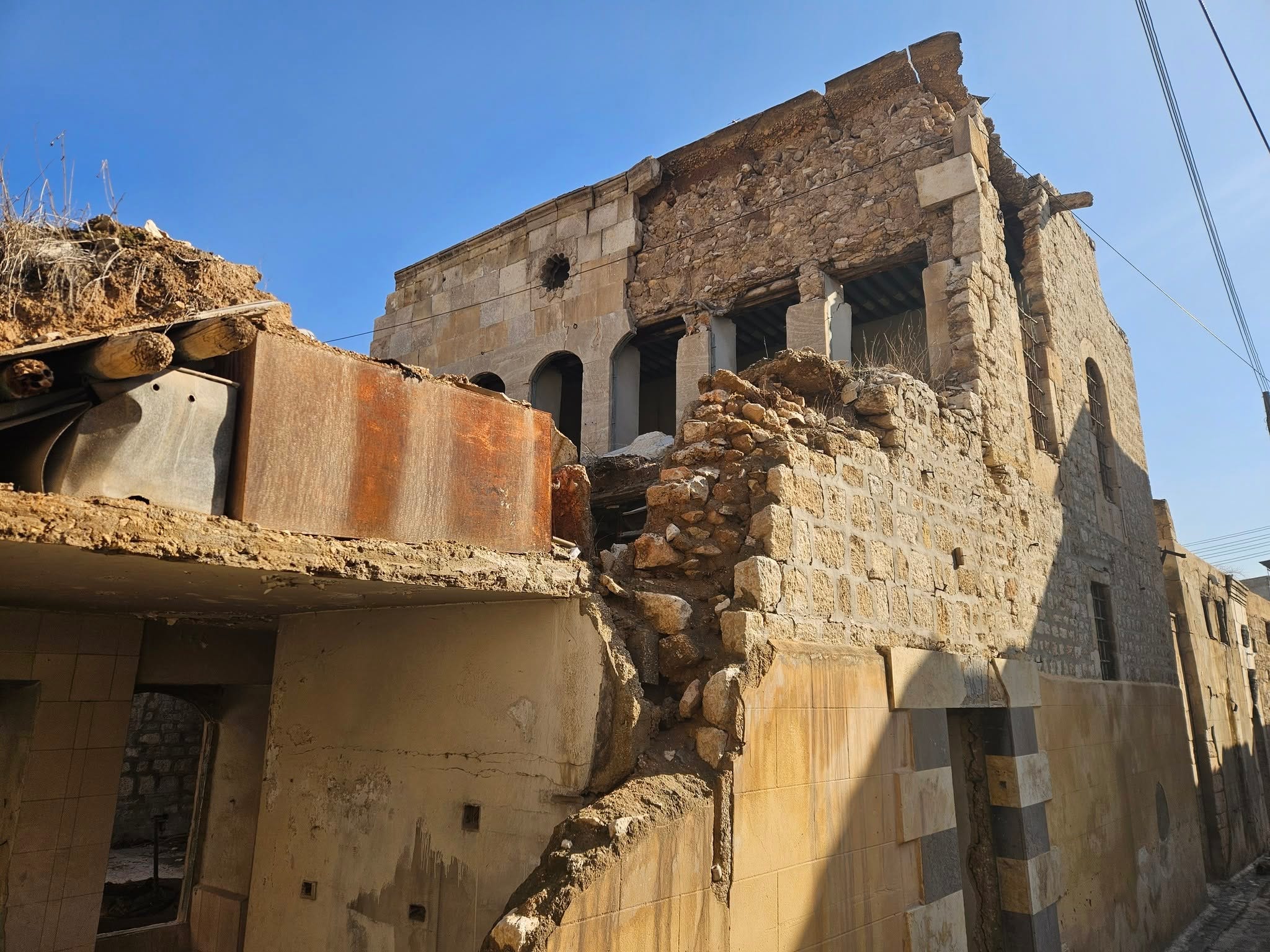
In the meantime, the al-Hazzazeh house—in a neighborhood that stayed in regime hands throughout the war but near the frontline dividing the city’s regime-held west and rebel-controlled east—came under mortar shelling from the rebels trying to secure their control over Aleppo. The house kept its roof, but rubble piled up in a few of the rooms. For a while, we loaned the home to relatives studying at Aleppo University. It later received uninvited and unwelcome guests. The local shabeeh, or regime thug, turned it into the headquarters for a family of drug dealers. There was Abu Zlam (“father of men”) and also his sister, who my neighbors insist mixed with none other than Nouh Zaiter, the infamous Lebanese drug lord.
Today, Assad is gone, and before him, Abu Zlam and his sister were gone too. But the damage was still immense. On top of the destruction, both of these houses were looted down to the electricity wires and water pipes—and almost all the windows and doors, as well.
This was the scene I returned to in January 2025, just one month after the fall of the Assad regime, following years of exile. I had craved being home so badly. But the Qadi Askar house, with no doors and walls but a dead rodent inside, was no longer. I ended up having to stay at an uncle’s home in western Aleppo. Though I might have not been a tourist, I definitely felt like a guest in my own city—despite my uncle’s best efforts, of course.
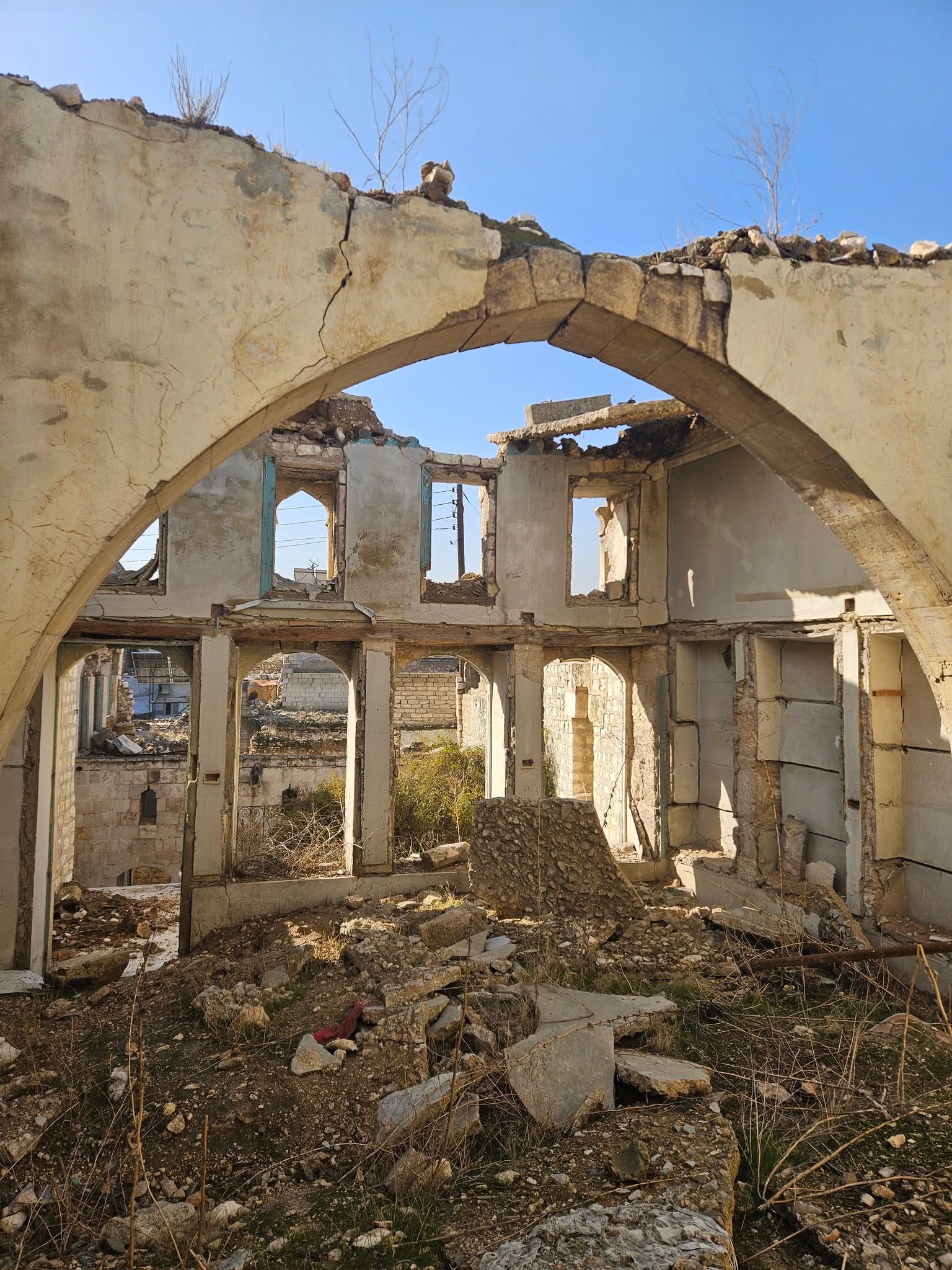
But there was still the al-Hazzazeh house. Though it might have not been where my bed was before I left Syria, it was a place where I had memories. There, I had participated in my father’s Visual Basic computer programming courses as a seventh grader, played computer games, spent days and nights studying, briefly opened up an “Oriental Gift Shop” that I had aptly named “Al-Hazzazeh House,” and spent many a beautiful evening with my high school and university friends.
One year later, in early 2026, I returned to Aleppo once more, this time determined to stay home at any cost. Maybe al-Hazzazeh could become that home. Luckily, the al-Hazzazeh home was still standing, even though not a single room had glass remaining on its windows, it was disconnected from the electricity grid, and it only got water via a makeshift tap placed at the entrance. Still, I ended up staying in al-Hazzazeh, bringing with me from Germany an inflatable mattress and a sleeping bag fit for negative 18 degrees Celsius (about zero Fahrenheit). It barely kept away the cold at negative 3, but I could sleep okay.
I was only supposed to stay in Aleppo for about a week, spending most of my time preparing an application for a permit to safeguard what remains of the Qadi Askar home, but I ended up staying ten additional days. Clashes between government forces and the Kurdish-led Syrian Democratic Forces holding out in Sheikh Maqsoud and Ashrafiyeh, two northern Aleppo neighborhoods, forced Aleppo Airport to shut down, leaving Damascus Airport completely overwhelmed.
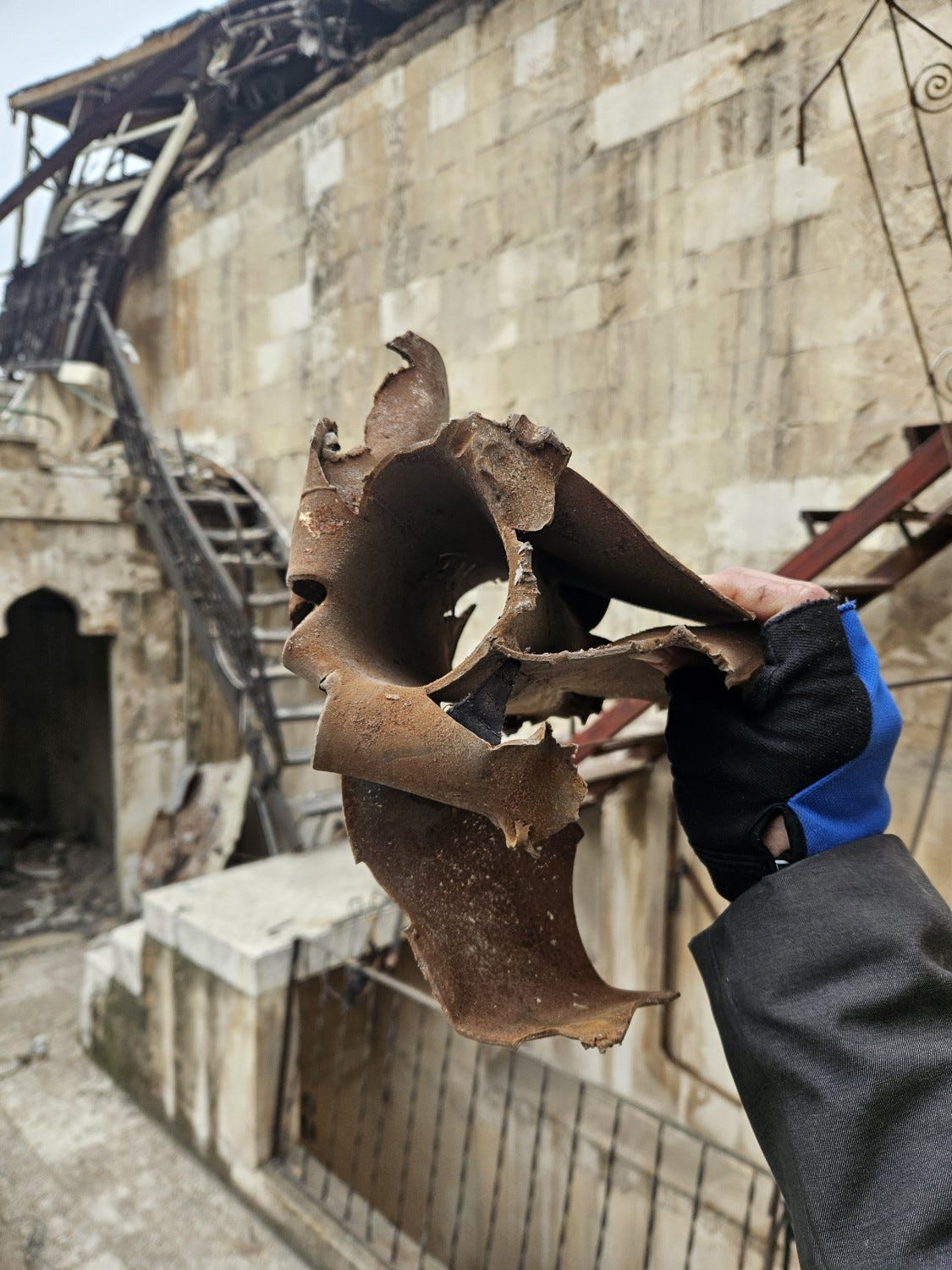
I took advantage of my extended stay in al-Hazzazeh to remove six truckloads of debris from the house. In the process, I came across the remnants of the mortar shell that caused all that debris, along with an unexploded, improvised bomb left behind by the drug dealers who had squatted in our home while we were in exile.
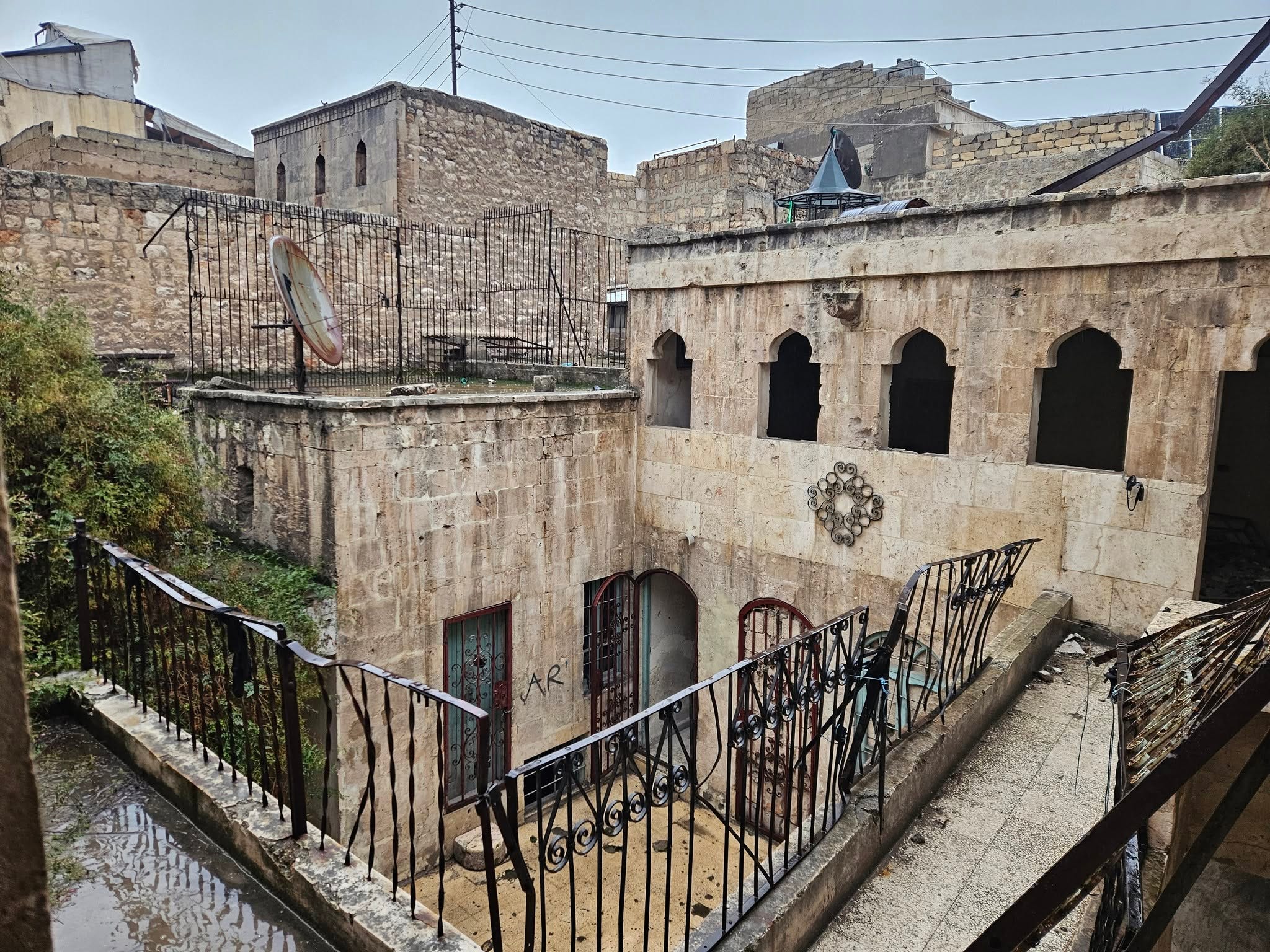
It’s now September and I’m back in Syria for the third time since the fall of the Assad regime. I’m staying in al-Hazzazeh. Things are messy again. This time, however, it’s because my home is finally being renovated, bit by bit, with help from family, friends, and colleagues specializing in cultural heritage preservation. They have chosen to invest in the al-Hazzazeh house’s rehabilitation and make it a base from which to support families in the neighborhood whose homes are in desperate need of rebuilding.
My family may have had it tough with both of our houses in al-Hazzazeh and Qadi Askar so devastated, but I also feel deeply privileged that I still have a home here—in Aleppo, in Syria—even if it’s a skeleton that we are slowly putting flesh back on.
We’ll be back. We’re home, after all.