
An Elegy for My Cairo
The chaotic inclusiveness of downtown Cairo, imperfect but vital, is being replaced by curated order. Downtown used to be ours—crowded, yes, but not staged.
I left my home in Maadi, the leafy Cairo suburb along the Nile, and ordered a taxi downtown. Destination: Felfela, the classic Egyptian restaurant, serving ful, ta’amiya, and other staples, that has been a fixture in downtown Cairo since 1959. The act itself felt ceremonial, as if I were returning to a site of pilgrimage. The car slid onto the Ring Road, skirting the ashwa’iyat—those dense informal settlements that have long framed Cairo’s uneasy modernity. I thought of my book Arab Modernism(s) and the persistent tension between vision and improvisation, between state ambition and everyday survival. From the elevated highway, the city looked like a palimpsest of failed promises and stubborn resilience.
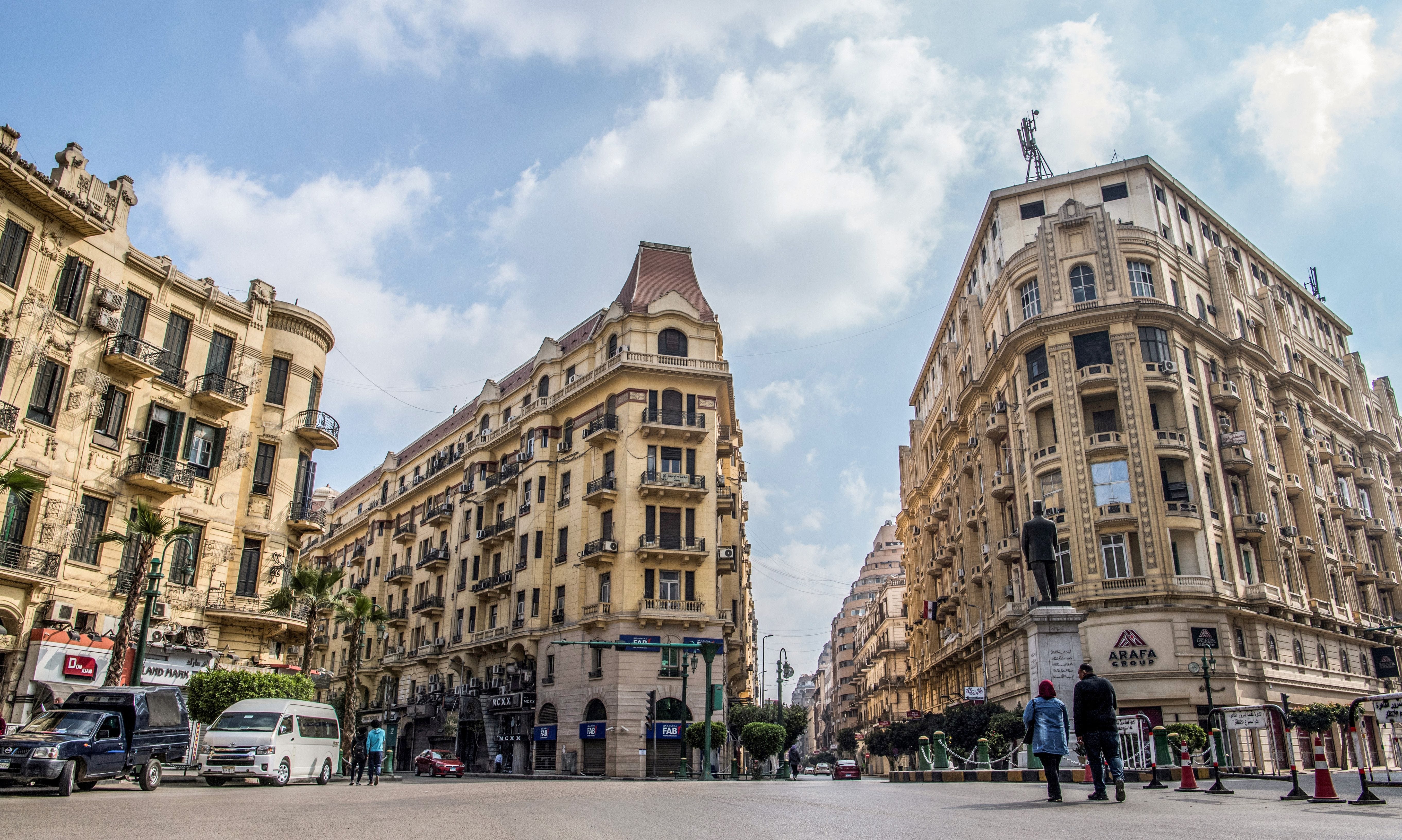
We entered downtown through Qasr al-Aini Street, approaching Tahrir Square with a caution that felt less about traffic and more about memory. I was dropped off next to Hoda Sha’arawy Street, home to Felfela. Before eating, I needed to walk. I turned toward Tala’at Harb Square.
Groppi was closed, covered in cloth. No sign of renovation, no announcement of an imminent reopening. Just a shroud. Once, Groppi was Cairo’s answer to Europe, a confectionary dream of a café echoing a cosmopolitan age. Now it stood mute, like a stage set after the actors have fled. I lingered, recalling scenes from Youssef Chahine’s films, especially Cairo Station, where downtown throbbed with desire and despair. The Cairo of that age was messy, alive, unvarnished. This one felt embalmed.
Across the square, Madbuly bookstore was open, but diminished. Its storefront reduced, the outdoor displays of books and magazines gone. In the 1970s and 1980s, this was a sidewalk republic of ideas: newspapers flapping in the wind, glossy magazines, political pamphlets. Now it felt contained, cautious, a shadow of its former self. I thought of Naghuib Mahfouz’s Cairo Trilogy and how his characters moved through a downtown that was porous, morally complex, open to chance encounters. That porosity is disappearing.
The Cairo of that age was messy, alive, unvarnished. This one felt embalmed.
Walking along Tala’at Harb Street, I noticed scaffolding and careful restoration. The Isma’iliya Development Company, a real estate investment venture that have been buying up buildings for nearly 20 years to gentrify downtown, has been methodically refurbishing facades. The Belle Époque of “Paris on the Nile” returns, at least visually. When I was a child, this street was packed with shoe stores. Vendors clogged the sidewalks selling belts, socks, cheap toys. The chaos was democratic. Now there are artisan coffee shops, curated restaurants, souvenir boutiques. And tourists—many tourists. I do not remember it being like this before. Downtown was ours—crowded, yes, but not staged.
Cinema Radio, built in 1932, still stands, though no longer a cinema. For a time, it was a television studio. The comedian Bassem Youssef filmed his show Al Bernameg there, before exile turned him into a global icon and occasional pundit. The building carries that residue of dissent. Now the passage leading to it houses an upscale Diwan bookstore, a café, and a souvenir shop. I entered the shop out of curiosity. Objects were displayed with museum-like reverence—and priced accordingly. A young Japanese couple examined papyrus prints and brass trinkets. For a moment, I felt I was in a heritage district curated for export, not in the unruly downtown of my adolescence.


Further along, Cinema Miami, also built in the 1930s, retained something of its seedy aura. Once, as a teenager, I would pause to inspect the lobby displays: Egyptian film stills, actresses in miniskirts from the 1970s, a fleeting liberation framed in glass. That particular spectacle is gone, but a residue lingers. Across the street stands Cinema Metro, a more refined Art Deco classic, where I watched Jaws as a boy—terrified and exhilarated—and later The Water Carrier Is Dead, an adaptation of Youssef El-Seba’i’s morbid novel. The cafeteria Excelsior, once attached to the theater, was shuttered. Another institution erased without ceremony. Another setting relegated to the dustbins of history.
I then embarked on a futile quest to find Lehnert & Landrock, that legendary purveyor of orientalist postcards and rare books. I passed the heavily guarded Sha’ar HaShamayim Synagogue, an Art Nouveau temple, its security barriers a reminder of the city’s layered histories and persistent anxieties. At Lehnert & Landrock’s former address: nothing. In its place, a mobile phone shop. My GPS insisted it existed further along the street. It did not. I later learned the bookshop had moved upstairs, to a smaller space, still selling its reproductions and photographs. But on that afternoon, it felt like a metaphor: heritage displaced, miniaturized, hidden on the first floor.
In contrast, Dar Al-Ma’aref and A’alam al-Kutub—two of downtown Cairo’s most venerable Arabic publishers and still some of the most prominent in the Arab world—remained steadfast. Both publishing houses look almost exactly as I remember them. Their continuity offered solace and comfort.
By then, I was famished. Felfela did not disappoint. Ful and ta’amiya served in that same rustic interior unchanged by fashion. It is one of the fragments that survived the city’s relentless editing. Afterward, I walked to Café Riche—once a haunt of revolutionaries, intellectuals, politicians. Naguib Mahfouz had sat here. So had actors like Youssef Wahbi, Anwar Wagdy, and Leila Mourad. Photographs line the walls, a curated nostalgia. I ordered a local drink and sat in contemplation. But Riche is no longer a site of rebellion. It is frequented by Arab tourists, Europeans, Egyptians of a certain class. Outside the cafe, young people took selfies. Performance replaces politics. A group of sha’abi teenagers loitered outside, curious. I sensed they would not be welcomed in. Inclusion has become aesthetic rather than social.
When I stepped back into Tala’at Harb Square, I noticed a security checkpoint occupying a large section of the sidewalk opposite Dar Al-Shorouk bookstore, one of the area’s landmarks. Officers sat casually on chairs. Behind them, another building was under renovation. Surveillance and restoration proceed hand in hand.
The façades may be restored, the sidewalks disciplined, the shops curated—but beneath the surface, the city’s older rhythms persist, faint but audible. Cairo resists finality.
As I waited for my car back to Maadi, I felt an ache that is difficult to articulate. The downtown of my youth is gone. What is emerging is a sanitized heritage spectacle catering to tourists and the affluent. The chaotic inclusiveness—imperfect but vital—is being replaced by curated order. Cinemas, Felfela, Café Riche: these are fragments of memory, stubborn relics.
I am reminded of the movie In the Last Days of the City. Its protagonist wanders through a Cairo on the brink, sensing that something irretrievable is slipping away. That film captured a city suspended between revolution and erasure. To extinguish the fire of a revolution, perhaps one must first erase its spatial traces. Erase memory itself.
And yet I will return. I always do. Downtown remains a chapter in my new book, My Cairo, even if rewritten by others. The façades may be restored, the sidewalks disciplined, the shops curated—but beneath the surface, the city’s older rhythms persist, faint but audible. Cairo resists finality. It mourns, it adapts, it remembers.


