

Agrarian Annihilation and the Fight for Land Justice in Palestine
How state violence and market coercion have devastated the social, ecological, and economic fabric of rural life in the West Bank.
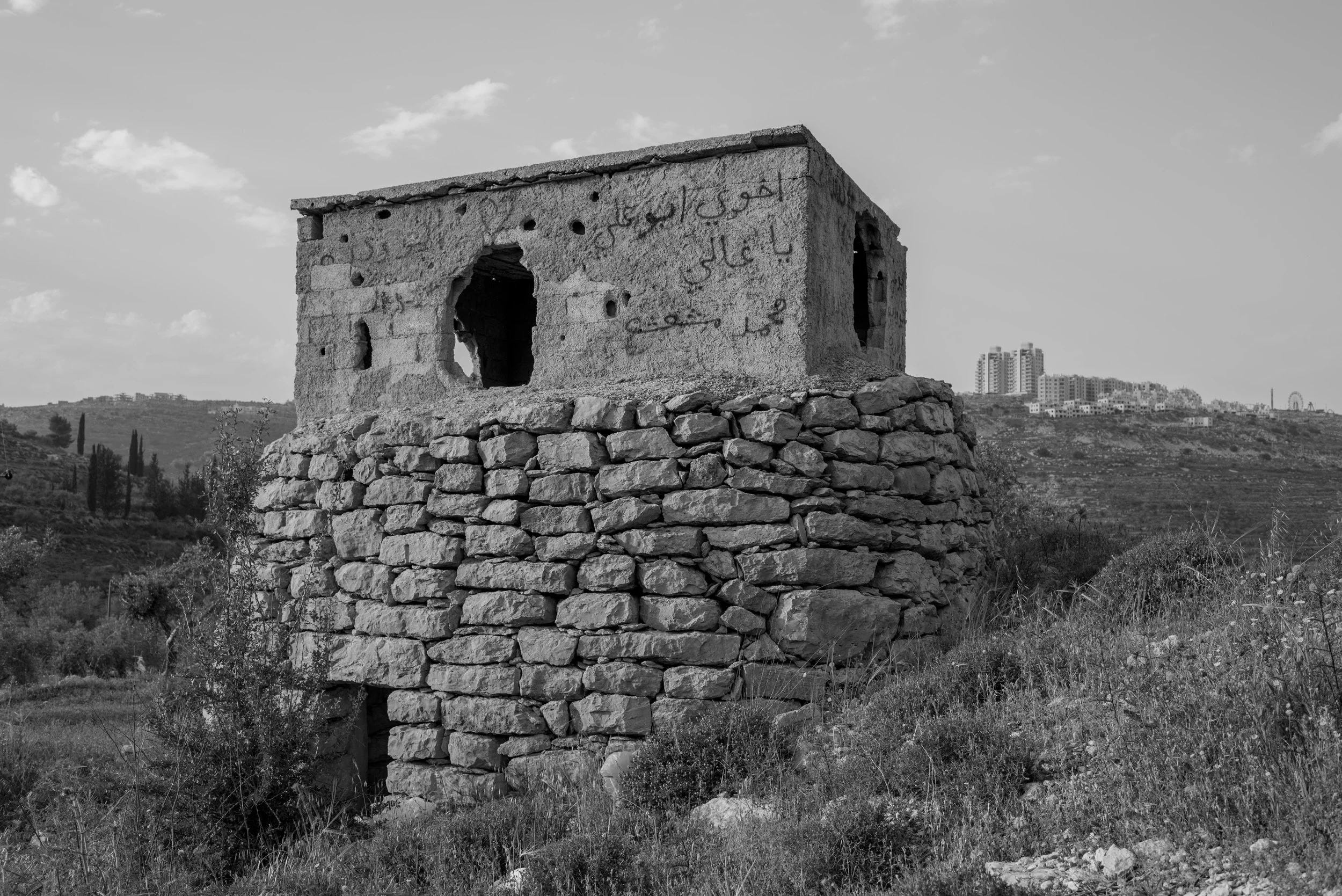
By Paul Kohlbry
Paul Kohlbry is Assistant Professor of Global Studies at the University of California, Santa Barbara.
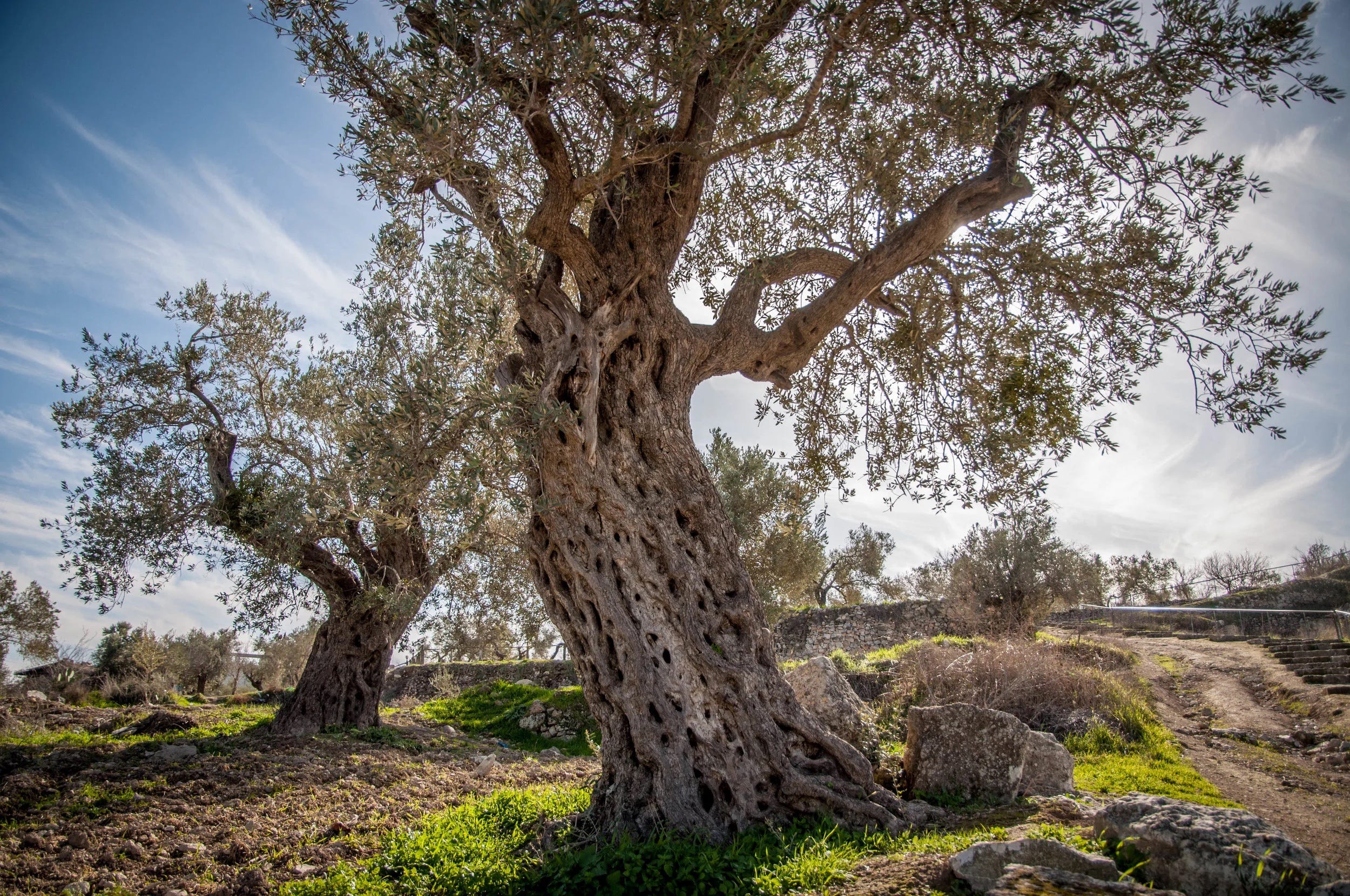
What comes to mind when you think of rural Palestine? If you have encountered artistic, literary, or religious depictions of the region, you may envision a pastoral scene, likely of a village inhabited by peasant families and surrounded by terraces planted with olive groves. If you are familiar with the political situation from one of the many books, documentaries, or human rights reports about the Israeli occupation, then a far less peaceful scene probably comes to mind. Perhaps it is one in which armored bulldozers are razing homes, or villagers are clinging to uprooted olive trees. These are powerful images, and generations of artists, travelers, scholars, and journalists have woven them into enduring narratives in which this rural landscape is emblematic of the land of Palestine. But too often, these narratives idealize or ignore the people who live there. They might celebrate peasant farmers for being rooted in the land or mourn their inevitable disappearance, but they rarely consider what such farmers do, what they have to say, or how they have changed over time.
What might we learn from rural Palestine if we understand the people living there not as an inert feature of the landscape, but as a force that is actively shaping it? My book Plots and Deeds centers peasant farming in the study of Palestine in order to understand what land means for Palestinians. To do so, I tell the stories of three villages in the central highlands of Palestine, in the West Bank, where property ownership and peasant labor are a living part of emerging collective identities, dynamic agrarian projects, and contested land defense politics. When we foreground those who own and work the land, we can rethink the question of Palestine as an agrarian question and see how daily struggles in the highlands are part of a global fight for land justice.
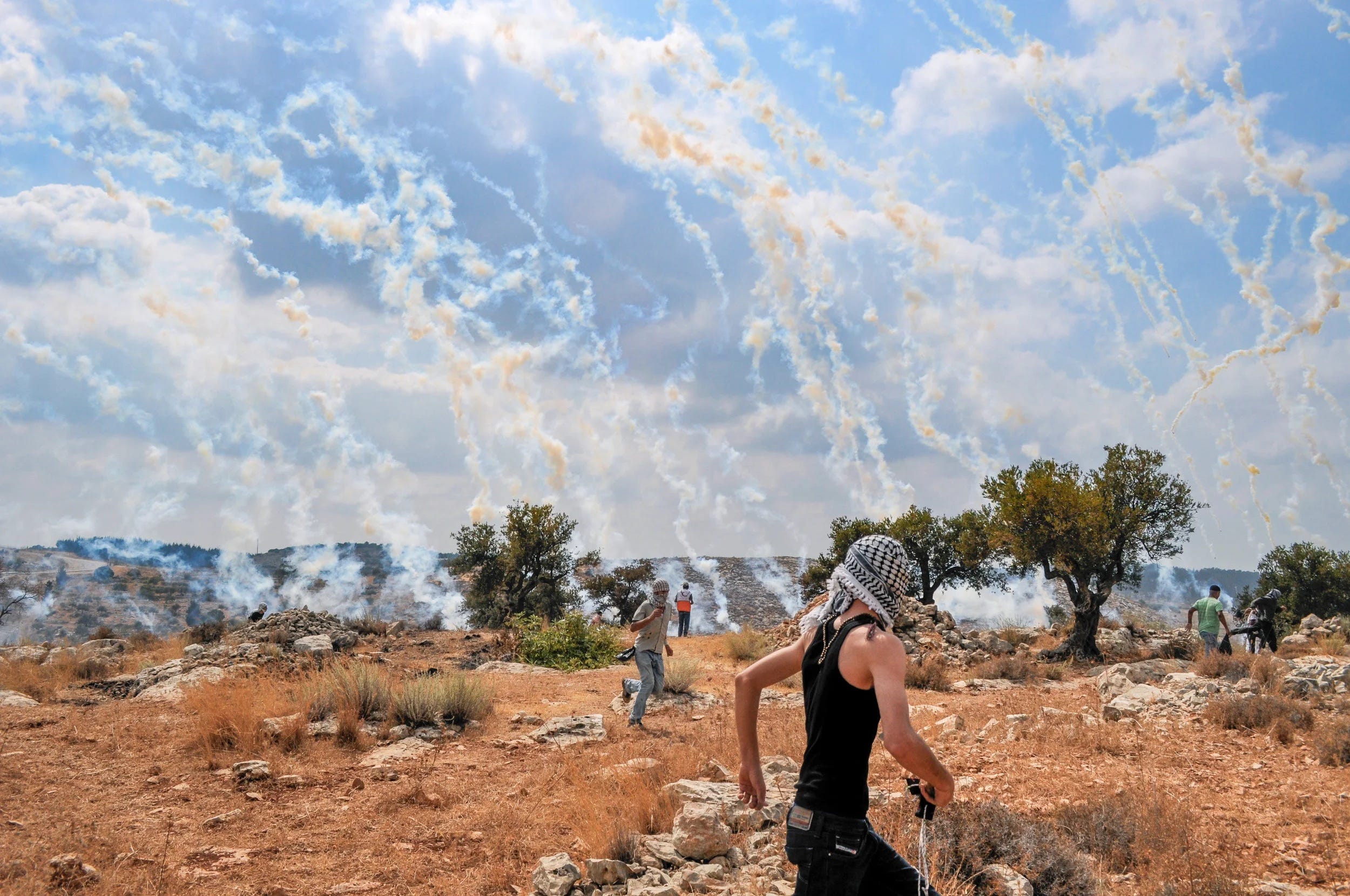
I did not come to Palestine intending to write a book about land or peasants. Instead, I came as a young activist. I knew little about farming, and my knowledge of rural Palestine largely came from reports detailing the many human rights violations those living there had experienced. I lived in the city of Ramallah in the mid-2000s and worked for the Palestinian Grassroots Anti-Apartheid Wall Campaign, better known as Stop the Wall. It was the protests in highland villages like Nil’in, Bil’in, and Nabi Saleh against Israel’s theft of their land and water that introduced me to one aspect of life in rural Palestine. Over time, I came to learn that these protests were part of a century-long tradition of popular resistance that had made the peasant an important figure for anti-colonial politics and international solidarity.
What was happening in these villages seemed at odds with what was happening in Ramallah. Financed by Western donors and international financial institutions, the Palestinian Authority (PA), the non-sovereign government that has administered parts of the West Bank since the 1990s, embarked on a new sort of nationalist program in which private sector development and liberal markets were supposed to lead to the creation of an independent Palestinian state. After the withdrawal of Israeli troops from the city, Ramallah became the epicenter of what has come to be known as “neoliberal Palestine.” Banks began to provide mortgages and personal loans. Luxury housing and commercial buildings seemed to be sprouting everywhere. New bars and restaurants opened to serve the growing numbers of entrepreneurs, consultants, diplomats, and activists like me. Visitors to Ramallah were often shocked by the sight of Palestinians driving high-end cars or sipping cappuccinos. A gulf seemed to be appearing between the “bubble” of Ramallah and the refugee camps and villages that supplied the city with cheap labor, and where military occupation was still very present.
What might we learn from rural Palestine if we understand the people living there not as an inert feature of the landscape, but as a force that is actively shaping it?
But rural places were changing, too. Working with Stop the Wall gave me the opportunity to spend time in highland villages across the West Bank, and in the late 2000s I visited Nabi Saleh to interview young protesters who had been shot by Israeli soldiers. Driving through the village at that time, I encountered the aftermath of these protests. Black circles had been burned into the road by flaming tires, spent tear gas grenades were strung together and displayed like strings of Christmas lights on the walls lining the street, and windows were boarded up to protect against bullets and shells. On certain days, I could smell the lingering stench of sewage left behind by the chemical “skunk” water that Israeli troops sprayed indiscriminately on demonstrators and homes. A few years later, just a stone’s throw away from a military observation tower at the village entrance, I noticed that something else had appeared: three billboards for a new Palestinian real estate development in the area. For low monthly payments, they offered Palestinian buyers land with a title deed. While these advertisements included the traditional agrarian imagery of olive trees and terraced hillsides, they were offering something very new: single-family homes, secure property rights, and great returns on investment.
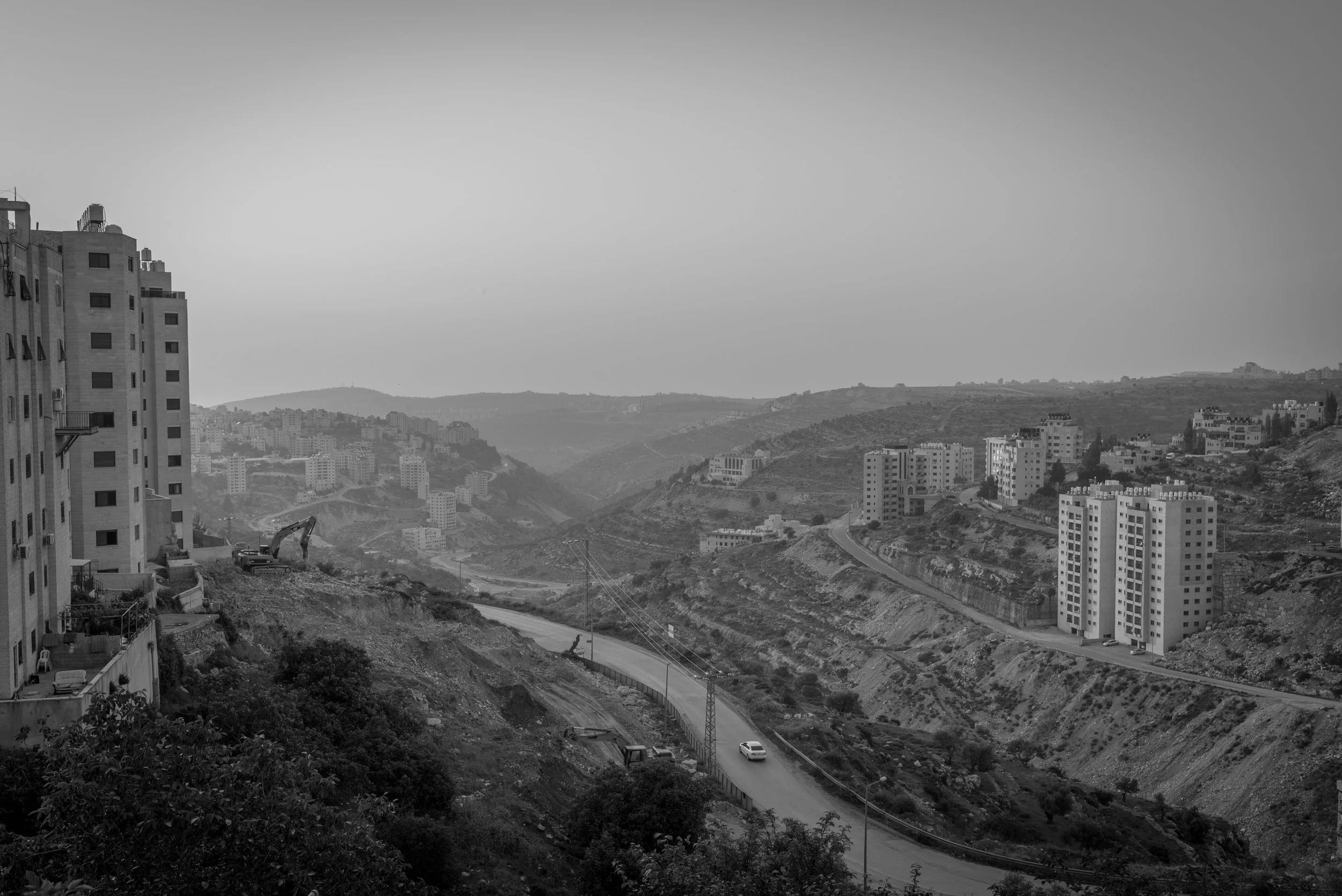
I began research for what eventually became Plots and Deeds in order to understand this jarring confluence of rural land defense, settler colonial dispossession, and capitalist real estate development. This research project soon took me a bit farther north of Nabi Saleh, to the villages of Bruqin, Qarawat Beni Zayd (Qarawa for short), and Farkha. In the hills shared by these three villages, I met farmers who had set up a cooperative to sell organic olive oil and established an experimental farm. On the hill across from that farm, I found that developers were converting agricultural land into real estate. Nearby, I spent time with the young communist activists organizing voluntary work crews to reclaim and replant land so as to prevent the Israeli authorities from confiscating it. And I accompanied the PA surveyors who were slowly mapping and titling the area. I found that many of the forces that are transforming Palestine, and indeed rural places across the planet, were converging in the central highlands. The landscape told a story not only of ever-expanding Israeli settlement and Palestinian dispossession, but of agrarian life upended.
One summer night in 2013, I was walking outside of Bruqin with a companion from the village. We could see the lights of the nearby settlement and military tower keeping watch over the area. Shortly before my arrival, the Israeli government had confiscated more land from the village to expand the settlement. Earlier in the day, I had met farmers who had been attacked by soldiers and evicted for “trespassing” on their own land, and had had crops polluted by sewage that flowed from the Israeli homes and factories on the hilltops. Pointing to the ground in front of us, my companion told me that the men and women of the village had once planted these hilltops with seasonal crops, taking advantage of every bit of arable land. Gazing at rocks and overgrown bushes, it was hard for me to imagine that anything had ever grown there.
Several years later, on a cloudy spring day, I was visiting the land of a farmer in Qarawa. His plot was planted with olive saplings as well as beans, peas, and other vegetables. On one terrace stood a small, cinder block structure that provided a shaded spot where one could sit and enjoy a meal. The day he invited me to visit, we sampled some fruits and vegetables while his older children worked, one taking a weed-whacker to the spring grass, the other encouraging a donkey, hitched to a plow, to stay its course. He did not have plans to invest heavily in agriculture, he told me, and farming had become more of a “hobby.” Instead, he thought of his land “as an investment, as real estate” that he would one day pass on to his children.
Land confiscation, environmental damage, and military violence in places like Bruqin have been very well documented for a long time. The activists and organizations that have been doing this documenting are part of a human rights movement that, since the 1980s, has worked tirelessly to gather evidence of Israeli crimes and advocate for the rights of Palestinians. As a result of their work, what Israel does to Palestinians in the occupied territories is no longer hidden from public scrutiny. Another result is that everyone from legal experts to radical activists to interested observers now talks about justice in Palestine through the frameworks of human rights and international law.
Land commodification in places like Qarawa has received far less attention. Part of the reason for this has to do with the pervasiveness of human rights thinking, which means that researchers pay scant attention to economic issues unless those issues are directly related to the Israeli occupation. But even among the recent revival of “political economy” in Palestinian studies, there is little discussion of the transformation of land ownership in Palestine’s villages. This absence is made even more troubling given that land has a great deal of personal and political importance for Palestinians, in addition to being the most valuable financial asset that many own. As a result, critical scholarship on political economy has yet to explore what changes to the land mean for those who live in villages like Bruqin and Qarawa, or how the confiscation of land on one hilltop might be connected to its commodification on the other.
When we begin to map connections between land grabs, settlement expansion, rising prices, and real estate speculation, the outlines of what I call agrarian annihilation come into view. Like others across historic Palestine, the people who live in the central highlands have experienced the decimation of their land base. Israeli colonization and incorporation of villagers as wage labor has driven both the dispossession and devaluation of agricultural land. These processes have inadvertently created opportunities for Palestinian developers, with increasing land sales putting new pressures on peasant farming. Together, coercive state actions and the invisible (but no less important) power of capital dispossess rural landowners while making agrarian livelihoods increasingly unviable—even unthinkable—for those who have managed to hold onto their land. Calling this process “agrarian change” is an understatement, as sometimes the changes are so drastic that it is impossible to know that agrarian activity existed in certain areas in the first place, much less if it could be possible in the future.
How are those facing annihilation demanding justice? In the highlands, peasant land tenure and farming practices are intertwined with land defense, and together they provide an ethical and political repertoire for what we should think of as land justice. The struggles of rural Palestine include claiming private property, losing village control over land, asserting the rights of cultivation, and reestablishing collective agrarian presence. And while it is illuminating to understand them as peasant struggles, those involved in them bear little resemblance to the heroic revolutionaries or tragic victims that populate so many agrarian imaginaries. Instead, they engage with colonial law, treat land as a commodity, rework traditional farming practices, and transform rural landscapes. They teach us that land justice is fundamentally a demand for return—both the return of the land that was taken, and a return to the land—that emerges from ordinary practices and small experiments that are transforming agrarian life.
Thinking about rural Palestine from the ground up reveals the changing roles that peasants have played, and continue to play, in the question of Palestine. It enriches accounts of both land grabbing and settler colonialism. And it allows us to understand the global significance of what is happening in the central highlands, a place that connects Palestine to the vast array of peoples and movements demanding land justice.
Agrarian Annihilation
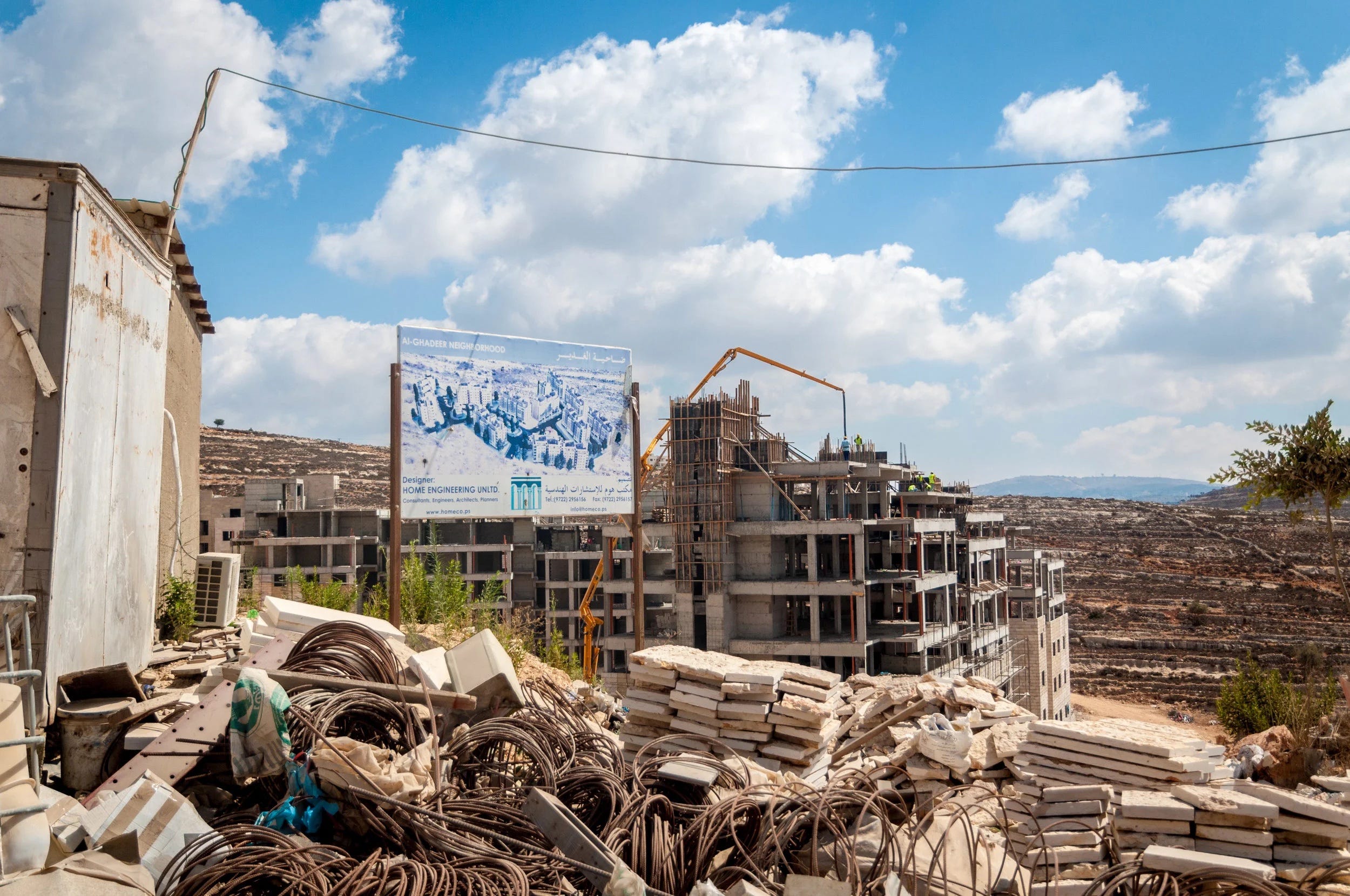
There are different ways to understand the destruction of rural Palestine. Some scholars have shown how the colonial history of property and enclosure structure Israeli colonization. Some have looked at the relationship between labor migration and Israeli settlement. And some have explored how the PA has seized village land for the benefit of private developers. Each reveals something different about dispossession in the West Bank: the specific mechanisms that Israel uses to seize land, the exploitation and management of a captive population, and the continuities between settler colonialism and neoliberal capitalism. I try to reorient some of their insights to illuminate the experiences and struggles of those who cultivate the land.
In the highlands, moments of assault and enclosure punctuate slower, incremental changes that make farmers abandon their land by limiting the time they can spend on it, the sorts of crops they grow, and their ability to make a living doing so. Peasant agriculture is not simply disappearing. It is being actively destroyed.
Conquest is at the root of annihilation. For Zionism the territorial goal has always been a settler colonial one: the acquisition of as much land as possible with as few Arabs as possible. Achieving this objective required establishing overlapping arrangements of Jewish ownership, sovereignty, and presence on the land, on the one hand, and the elimination of the Palestinians as a people with the ability to exercise a sovereign claim over a territory, on the other. In the West Bank, conquest is an ongoing process carried out by the Israeli military and police as well as quasi-state and private actors that include settler organizations, vigilante groups, and paramilitaries. Like other settler colonial projects, these different forces share a commitment to settler dominance, but do not always operate together. Instead, different logics—security, counterinsurgency, profit, territorial expansion, revenge—create multiple frontiers within the West Bank itself. While large-scale bombings and massacres make headlines, it is the regular acts of mundane violence that make conquest a grinding, ever present reality for Palestinians.
They are not only fighting against settlers and soldiers, but also fighting to convince their families and neighbors that peasant agriculture and agrarian values are worth defending.
Law legitimizes conquest and paves the way for further dispossession. Prior to 1948, the Zionist movement acquired land primarily through market acquisitions. After 1948, the new state created a legal regime to facilitate and manage the seizure of Palestinian land. In 1967, both private and state power began to orchestrate the acquisition of Palestinian land in the occupied territories. And after 1995, the Oslo Accords divided the West Bank into Areas A, B, and C, giving Israel additional tools to dispossess Palestinians. Through a regime of physical, bureaucratic, and legal barriers, Israel has made Area C—which accounts for around 60 percent of the West Bank and more than two-thirds of its agricultural land—effectively off limits to Palestinian farmers. This arrangement, which on paper was supposed to be an interim measure, is now more than three decades old and constitutes a permanent layer of colonial jurisdiction over Palestinian territory, one that now functions as a large land reserve for future colonization.
For cultivators, colonization results not only in land dispossession, but also in land destruction. In the highlands, Israeli settlement is a housing project, with some industrial zones as well. To build additional residential buildings or factories, the Israeli authorities raze pastures and cultivated areas, and remove trees and structures along the path of walls and near checkpoints to create sterile buffer zones. Sewage and industrial waste flow out of these restricted areas, damaging agricultural land that is still technically under Palestinian control. Destruction is at once immediate and drawn out, with the uprooting of trees and demolition of homes accompanying slower processes of environmental degradation and invisible ecological change.
The different struggles for land in the rural highlands of the West Bank are a microcosm of what is happening in Palestine, and indeed across the globe. The people who live in these villages face colonial powers that dispossess them, economic forces that price them out, political schemes that ignore them, and ideologies that both celebrate or condemn them as atavistic and unchanging. They are not only fighting against settlers and soldiers, but also fighting to convince their families and neighbors that peasant agriculture and agrarian values are worth defending. They show us that the forces that drive agrarian annihilation also shape the practices and subjectivities of those who decide to resist. And as they fight for the return of the land, and to return to it, they teach us what land justice means in Palestine.
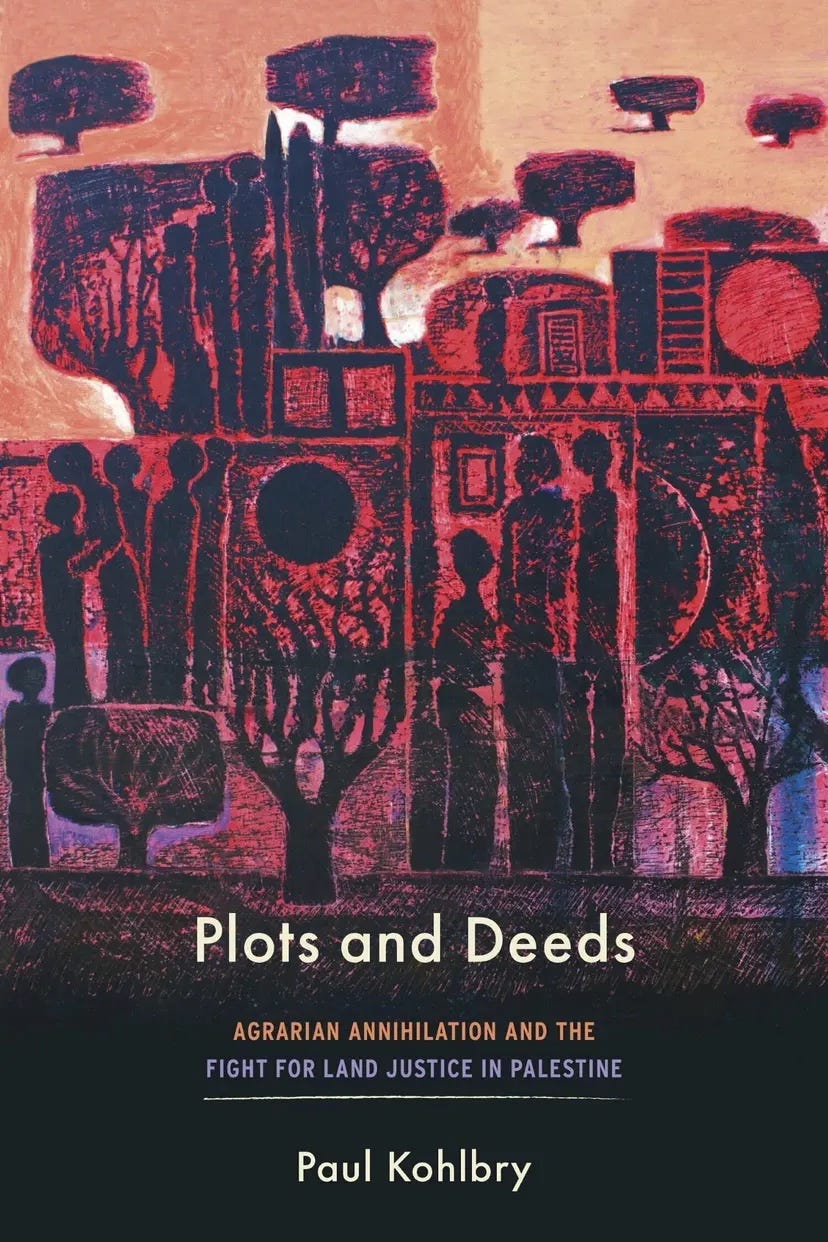
Editor’s note: This essay is adapted from Plots and Deeds: Agrarian Annihilation and the Fight for Land Justice in Palestine by Paul Kohlbry, published this month by Stanford University Press.